Updated: February 2026 | Space & Science
Veteran astronaut Mike Fincke has confirmed that he was the crew member whose in-orbit medical issue led NASA to end an International Space Station mission early last month—marking the first time the agency has shortened an ISS staffing mission for health reasons.
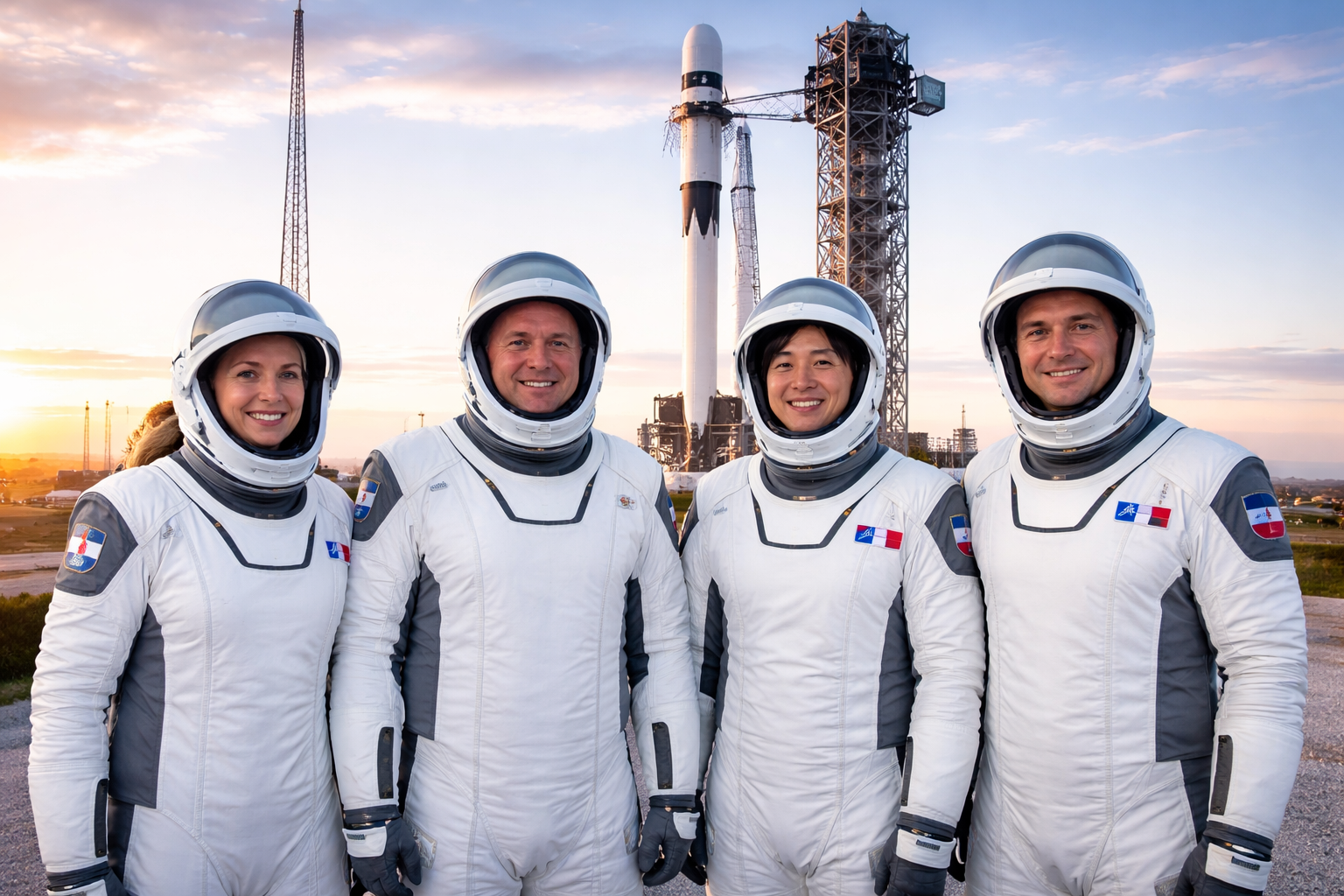
Fincke and his Crew-11 teammates—NASA astronaut Zena Cardman, Japan Aerospace Exploration Agency (JAXA**) astronaut Kimiya Yui, and Russian cosmonaut Oleg Platonov of Roscosmos—returned to Earth in mid-January, leaving a reduced crew aboard the International Space Station until a replacement team arrived weeks later.
What happened in orbit
NASA did not initially identify the affected astronaut or describe the condition, citing long-standing medical privacy rules. On Wednesday, Fincke publicly named himself but did not disclose specifics. He said the incident required immediate care from crewmates and remote guidance from NASA flight surgeons, after which his condition stabilized.
NASA decided to bring the crew home to access advanced medical imaging and diagnostic tools that are not available aboard the ISS. While the station is equipped for routine care and emergency stabilization, it lacks the full capabilities of a hospital on Earth.
Why it matters
The decision underscores both the risks of long-duration spaceflight and the importance of rapid medical decision-making in orbit. NASA briefly canceled planned activities, including a spacewalk, to prioritize crew health and mission safety. The agency also accelerated the next rotation to restore normal staffing levels.
A four-person Crew-12 arrived on February 14, returning the ISS to its typical seven-astronaut complement—critical for maintaining research, station operations, and technology demonstrations.
Scientific context
Spaceflight can stress the human body in unique ways. Previous studies have documented conditions such as space adaptation syndrome (temporary nausea and vertigo), vision changes linked to optic nerve swelling, and rare cases of blood clots. NASA typically releases findings from such events in anonymized scientific research rather than personal medical updates.
What’s next
Fincke says he is recovering well and undergoing standard post-flight reconditioning at Johnson Space Center in Houston. The episode is expected to inform future medical protocols for missions, especially as NASA prepares for longer journeys beyond low Earth orbit.
At a January briefing, Fincke emphasized that the response demonstrated the agency’s preparedness: training, onboard teamwork, and ground support combined to ensure a safe return.
Real-world impact
As human spaceflight expands—to lunar missions and eventually Mars—this incident highlights the need for enhanced onboard medical diagnostics, telemedicine, and rapid return options. Lessons from Crew-11 are likely to shape spacecraft design, crew training, and health monitoring technologies for future exploration.
Crew-11 launched from Kennedy Space Center in August 2025.