Science & Earth Observation | February 26, 2026
Unseasonably heavy rainfall in early February triggered widespread flooding across northern Colombia’s Córdoba department, pushing the Sinú River beyond its banks during what is typically one of the region’s driest months. Satellite data from NASA Earth Observatory show large areas of farmland, wetlands, and communities submerged, highlighting how short-lived weather anomalies can cause major disruption.
Satellite imagery captures rapid flooding
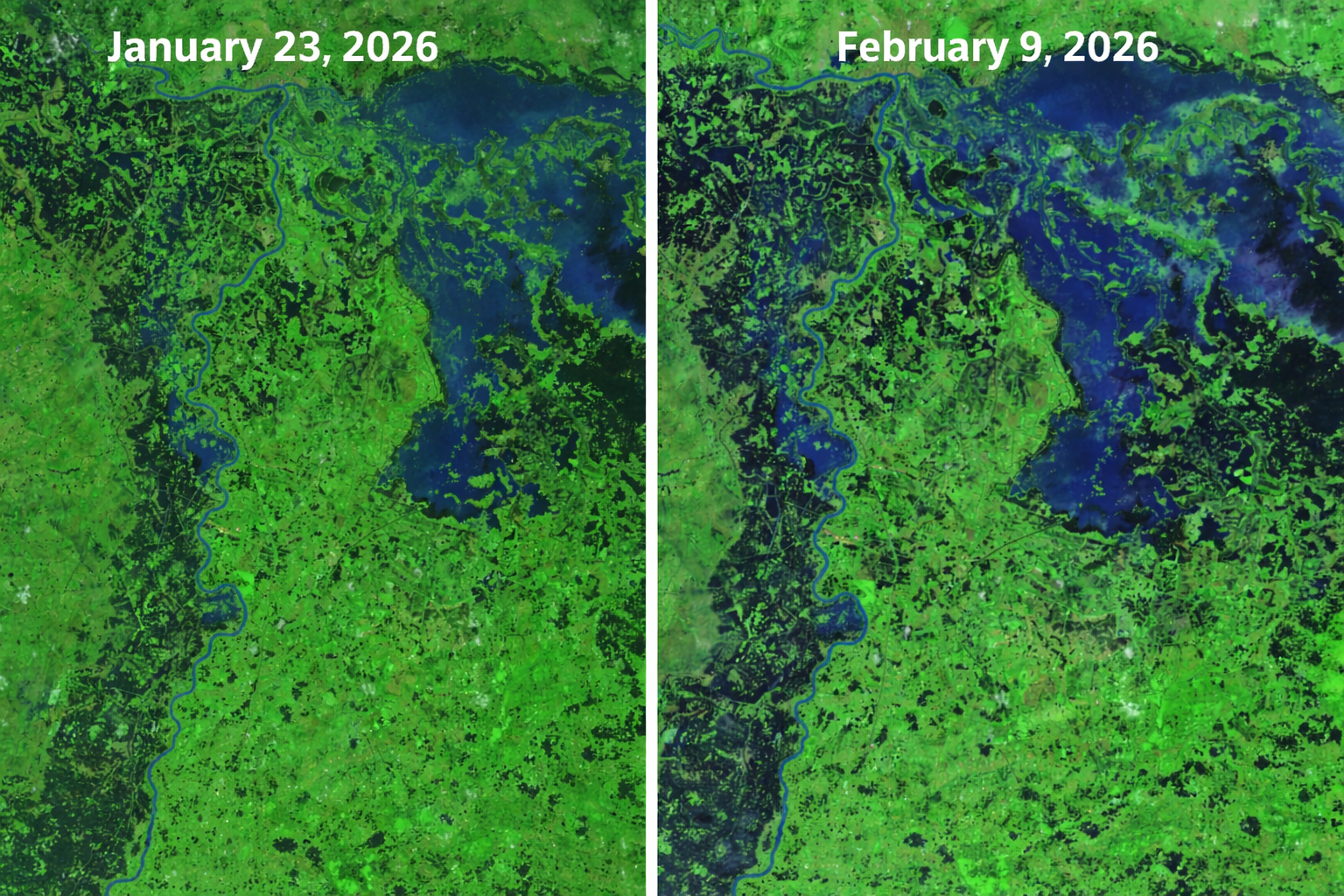
False-color images collected on February 9 by the Operational Land Imager aboard Landsat 9 reveal dark floodwaters spreading across pastures and croplands, especially west of the Sinú River. The images contrast sharply with scenes from January 23, when fields were largely dry and prepared for planting.
Water levels were also unusually high in wetland complexes east of the river. The city of Lorica, home to about 90,000 people, is visible near the flooded zone.
What caused the floods
February is normally a dry period in Córdoba Department, a key agricultural and cattle-producing region. In 2026, however, rainfall intensified after a rare cold front moved south through the Caribbean on February 1–2. The system forced moisture-rich air over northern Colombia and the Andes, resulting in several days of intense downpours.
Some areas recorded 4 to 7 centimeters (2 to 3 inches) of rain per day. Rainfall estimates from NASA’s Integrated Multi-satellite Retrievals for Global Precipitation Measurement (IMERG) indicated peak rates of about 1.7 centimeters per hour near Lorica on February 1.
Flooding persisted for weeks
Satellite observations show that flooding did not quickly subside. Imagery from Terra satellite on February 25 confirmed that water remained widespread across much of the department, indicating prolonged impacts on agriculture and settlements.
Human and agricultural impacts
According to the UN Office for the Coordination of Humanitarian Affairs, more than 80 percent of Córdoba experienced flooding. Preliminary assessments from government and media sources report:
- Thousands of homes damaged or destroyed
- More than 11,000 families displaced
- Over 150,000 hectares of farmland inundated
These losses are significant in a region where dry-season activities are critical for food production and livestock management.
Why Earth-observing satellites matter
The event underscores the value of satellite monitoring for disaster response and planning. Data from Landsat and rainfall measurements derived from the Global Precipitation Measurement mission help scientists and authorities track flood extent, assess damage, and improve early-warning systems. As climate variability increases the likelihood of off-season extremes, consistent Earth observation remains essential for reducing risk and supporting recovery efforts.