 Dr. Raj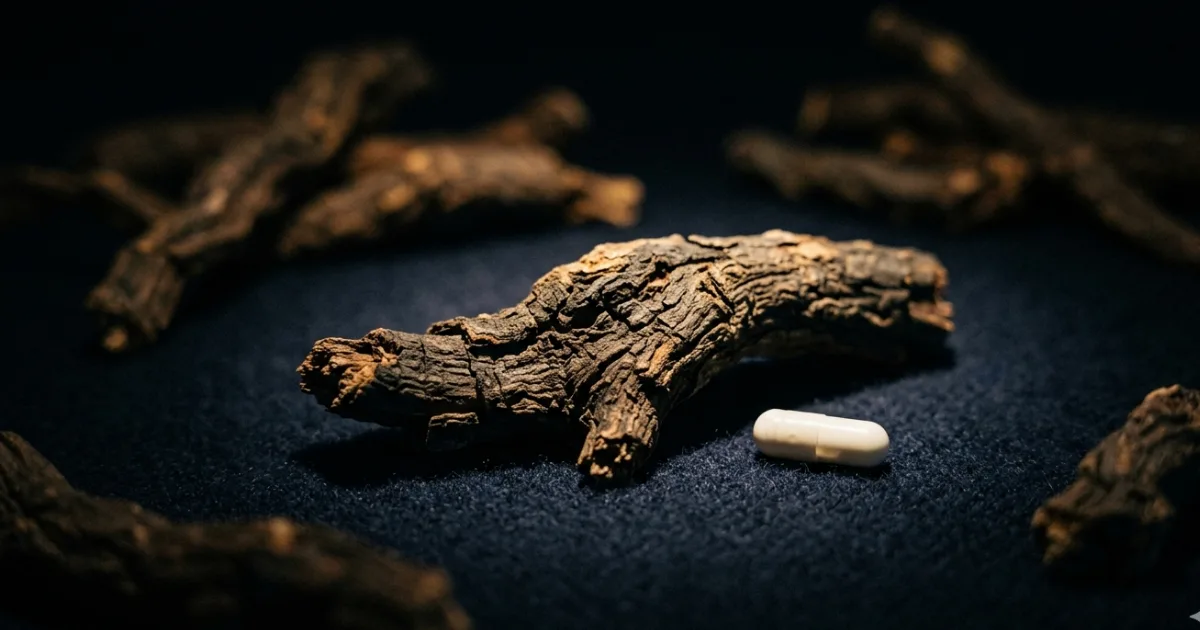
In This Article
- A Politician's Bold Claim — and the Problem With It
- What Is Ibogaine and Where Does It Come From?
- Why Does Ibogaine Show Promise — But Also Serious Risks?
- What the Veterans Study Actually Found
- What Still Needs to Be Proven Before Anyone Should Get Excited
A drug so powerful it can stop your heart — and the US Health Secretary just called it the greatest psychiatric treatment in history. On April 23, 2026, Robert F. Kennedy Jr. told a Senate hearing that ibogaine is the most promising treatment for depression and PTSD "that anybody's ever seen." Researchers at Johns Hopkins — the very institution he cited as his source — are now saying that's not what the data shows.
A Politician's Bold Claim — and the Problem With It
RFK Jr.'s comments came right after President Trump signed an executive order on April 18, 2026, aimed at accelerating research and expanding access to ibogaine and other psychedelics. The political momentum behind this drug is real. Former Texas Governor Rick Perry and several veterans' groups have been pushing hard for ibogaine to be taken seriously, and last year Texas committed $50 million to psychedelics research, including ibogaine.
But here's the interesting part — the scientist Kennedy credited with calling ibogaine extraordinary doesn't seem to exist. Sandeep Nayak, medical director of the Johns Hopkins Center for Psychedelic and Consciousness Research, told Scientific American he is not aware of anyone at Hopkins who described the drug in those terms. He did say ibogaine deserves to be studied. He just said the science is nowhere near ready to justify such confident praise.
What Is Ibogaine and Where Does It Come From?
The iboga plant has been used for generations in Gabon as part of the Bwiti spiritual tradition. Western science first took notice of ibogaine in the 1990s, when early studies suggested it might help people overcome addiction. That got NIDA — the US National Institute on Drug Abuse — interested. But by 1995, the agency pulled back from funding clinical trials after reports of ibogaine-related deaths that occurred outside of any controlled setting. The drug quietly faded.
It never fully disappeared, though. People dealing with opioid addiction, depression, and PTSD have been quietly travelling to clinics in Mexico and other countries where ibogaine is legal. Some of them — particularly combat veterans — reported dramatic improvements. Those personal testimonies are now driving political momentum in Washington, even as scientists urge caution.
Why Does Ibogaine Show Promise — But Also Serious Risks?
There are two things happening with ibogaine at the same time, and it's important to hold both in your head. On one side, early results look genuinely interesting. On the other — the drug can kill you. Brian Shoichet, a professor of pharmaceutical chemistry at the University of California, San Francisco, was blunt about it: ibogaine, as a molecule, is toxic. It has caused sudden cardiac death — including in people who were using it specifically to treat a mental health condition. That's not a minor side note. That's a fundamental problem any treatment programme would need to solve.
The cardiac risk is why most serious research protocols now pair ibogaine with magnesium supplements, which may help reduce strain on the heart. But none of this has been proven in large-scale controlled trials. Not yet.
What the Veterans Study Actually Found
The study generating the most excitement right now was published in Nature Medicine in 2024. Maheen Mausoof Adamson, a clinical professor of neurosurgery at Stanford, was involved in the research. The team studied 30 combat veterans with traumatic brain injuries who received ibogaine treatment at a clinic in Mexico. The results? Significant drops in depression and anxiety. Brain scans showed structural and functional changes linked to better executive function and lower PTSD symptoms. No serious adverse events reported.
"The effects we saw from this were radical," Adamson told Scientific American. And she noted that the improvements appeared more pronounced than those typically seen with psilocybin — another psychedelic being studied for mental health.
"The ibogaine research does not fully match the excessively rosy picture touted by advocates. The science is in a far more preliminary state than that of psilocybin."
— Sandeep Nayak, Medical Director · Johns Hopkins Center for Psychedelic and Consciousness Research, 2026That said — the study had no control group. There was no comparison with other treatments. Thirty people is a small number. And because ibogaine is illegal in the US, almost all trials so far have been conducted in Mexico or other countries, which makes consistent oversight harder. These aren't reasons to dismiss the findings, but they are reasons not to declare victory yet.
What Still Needs to Be Proven Before Anyone Should Get Excited
The honest picture is this: ibogaine is worth studying seriously, but the science is still in early stages. There have been only two published randomised, double-blind controlled trials on ibogaine — the kind of study that actually confirms whether a drug works. Neither focused specifically on depression or PTSD. Compare that to psilocybin, which has been through many more rigorous trials and is much further along the research pipeline.
For Indian readers, it's worth noting that mental health treatment gaps are enormous domestically — depression affects over 56 million people in India according to WHO estimates, and access to any therapy, let alone psychedelic-assisted treatment, remains limited. Ibogaine is nowhere close to clinical availability in India. But the global push to legitimise psychedelic medicine does create an opening for the regulatory and research conversations India will eventually need to have.
What researchers want now is funding for proper randomised trials, with proper cardiac monitoring and control groups. Trump's April 18 executive order is meant to make that easier. Whether the science can keep up with the political enthusiasm is the question nobody can answer yet.
- Promising, not proven — Early ibogaine studies show real effects on depression and PTSD, but the evidence base is small and lacks gold-standard controlled trials.
- Cardiac risk is real — Ibogaine has caused sudden cardiac deaths; any legitimate treatment pathway must solve this before broader access is considered.
- Politics is ahead of science — Political momentum from veterans' groups and the Trump administration is outpacing what researchers have actually established about safety and efficacy.
"I firmly believe it should be studied and may be a very useful treatment, but the science for ibogaine is in a far more preliminary state than that of psilocybin." — Sandeep Nayak, Johns Hopkins School of Medicine, 2026.
📄 Source & Citation
Primary Source: Pappas, S. (2026, April 24). RFK, Jr., says ibogaine holds unprecedented promise for treating depression. Here's what the science says. Scientific American. scientificamerican.com
Key Study: Cherian K, et al. (2024). Therapeutic use of ibogaine in combat veterans with traumatic brain injury: an observational study. Nature Medicine. doi.org/10.1038/s41591-023-02705-w
Authors & Affiliations: Maheen Mausoof Adamson (Stanford University School of Medicine); Sandeep Nayak (Johns Hopkins School of Medicine)
Key Themes: Psychedelic Therapy · Depression Treatment · PTSD · Veterans Mental Health · Drug Policy
Supporting References:
[1] Noller GE et al. (2018). Ibogaine treatment outcomes for opioid dependence: a qualitative study. J Psychedelic Studies, 2(2):97–105.
[2] Davis AK et al. (2021). Effects of psilocybin-assisted therapy on major depressive disorder. JAMA Psychiatry, 78(5):481–489.
[3] Koenig X, Hilber K. (2015). The anti-addiction drug ibogaine and the heart. Molecules, 20(2):2208–2228. PMC4837967
No comments yet. Be the first to share your thoughts.
Leave a Comment