 Dr. Raj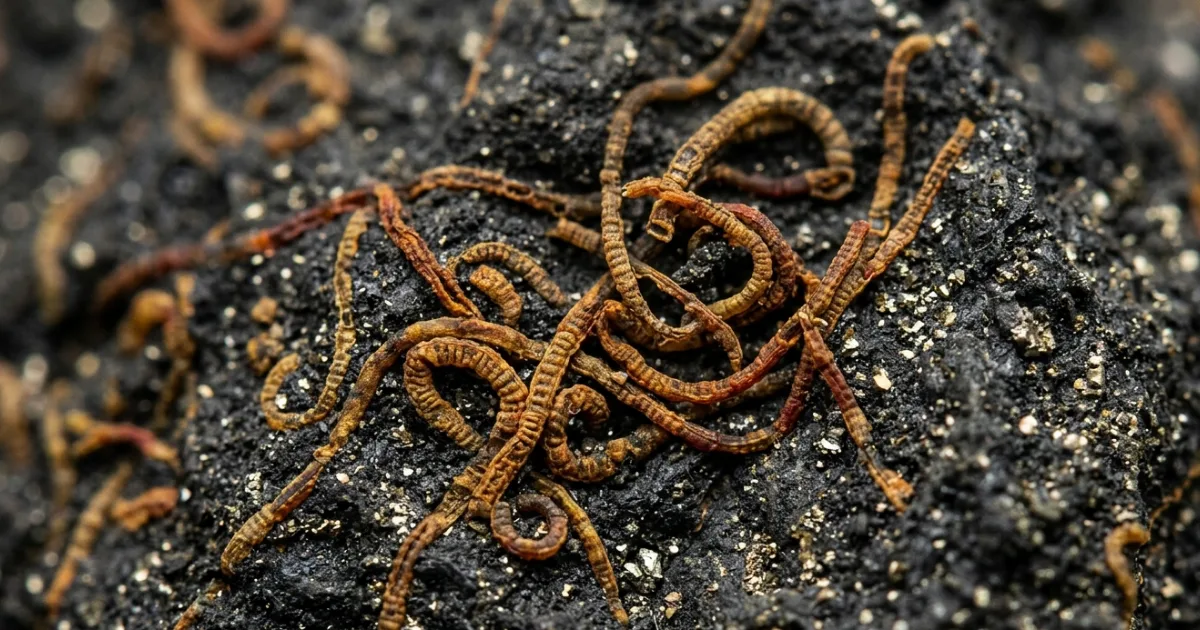
In This Article
- The Fossil That Fooled Paleontologists for Decades
- What the Ediacaran Period Was — and Why It Matters
- How Did Scientists Figure Out They Were Wrong?
- What the Fossils Actually Are
- What This Changes About Animal Origins
For years, tiny marks in 540-million-year-old Brazilian rock were considered some of the earliest evidence of animal life on Earth. Small, winding trails in ancient seafloor sediment — the kind only a moving creature could leave behind. Except no creature ever made them. A team using one of the world's most powerful particle accelerators has now confirmed that the structures are fossilised communities of ancient bacteria and algae, their cells still partially intact after half a billion years. The Ediacaran fossil record just got a lot harder to read.
The Fossil That Fooled Paleontologists for Decades
The fossils were found in Mato Grosso do Sul, a state in central-western Brazil, embedded in a geological unit called the Tamengo Formation. The rocks formed in a shallow marine environment along a continental shelf during the final assembly of the supercontinent Gondwana, roughly 540 million years ago.
Earlier studies interpreted the structures as trace fossils — marks left in sediment by tiny worm-like animals moving across or through the seafloor. If correct, they would represent meiofauna, a group of microscopic invertebrates less than one millimetre long, existing tens of millions of years earlier than the fossil record had confirmed.
That interpretation held for years, partly because the technology needed to challenge it simply did not exist at the time. Then researchers decided to look again — and brought a particle accelerator with them.
What the Ediacaran Period Was — and Why It Matters
Think of the Ediacaran period as the dress rehearsal before the most spectacular show in the history of life on Earth. It ran from roughly 635 to 539 million years ago, just before the Cambrian explosion — the geological moment when oxygen levels in the oceans rose high enough to support complex, energy-hungry animal bodies, and life diversified into almost every major animal group we know today.
What lived during the Ediacaran is one of paleontology's most contested questions. Some organisms from this period are clearly biological but fit no living category. Others look like early animals. And some, it now turns out, were neither.
Whether meiofauna existed during the Ediacaran matters because it would indicate that small animals had already evolved before oxygen levels reached the threshold needed to support them. The Brazilian fossils were a key piece of that argument. Now they are not.
How Did Scientists Figure Out They Were Wrong?
The answer lies in a machine most people will never hear of: the MOGNO beamline at Sirius, Brazil's particle accelerator facility in Campinas. Unlike standard lab microscopes, this system performs what researchers call zoom tomography — generating three-dimensional images at the nanoscale while the sample remains completely intact.
Lead author Bruno Becker-Kerber, now conducting postdoctoral research at Harvard University, explains that previous studies simply lacked access to this level of resolution. The earlier interpretation was not careless — it was the best available conclusion given the tools of the time. What changed was the technology.
The team used both microtomography and nanotomography to image structures ranging from a few micrometres to a few millimetres in size. They also applied Raman spectroscopy, a technique that identifies chemical compounds by measuring how light scatters off a material, to detect organic molecules preserved inside the fossil cell walls. Organic material inside a cell wall is not something a passing animal leaves behind.
"These aren't traces of animals that may have passed through the area. The microfossils have cellular structures — sometimes with preserved organic material — consistent with bacteria or algae."
— Bruno Becker-Kerber, Harvard University · Gondwana Research, 2026What the Fossils Actually Are
The structures appear in three distinct size ranges, suggesting several species lived together in the same microbial community. The largest forms resemble green or red algae. The smaller fossils are consistent with cyanobacteria or sulfur-oxidising bacteria — microbes that use sulfur compounds in their metabolism rather than oxygen.
Some samples contain pyrite, a mineral made of iron and sulfur that commonly forms in low-oxygen environments and around sulfur-metabolising organisms. That chemical signature fits the sulfur bacteria interpretation and, crucially, also fits the environmental story: an ancient ocean where oxygen had not yet risen high enough for animals to thrive.
What makes the identification definitive, rather than merely plausible, is the physical evidence. The fossils preserve concave and convex cell partitions, coiled filaments, cell wall divisions, and pockets of organic matter across multiple collection sites in both Corumbá and the Serra da Bodoquena region. These structural details do not appear in sediment disturbed by a moving animal. They appear in organisms that lived, died, and were mineralised in place.
What This Changes About Animal Origins
The immediate consequence is clear: the Brazilian fossils no longer support the idea that meiofauna existed during the Ediacaran. That pushes the confirmed fossil record for these tiny invertebrates forward to the Cambrian, where they are well documented, and strengthens the case that low oxygen levels in pre-Cambrian oceans genuinely prevented them from evolving earlier.
The broader consequence is harder to quantify. The same imaging limitations that led earlier researchers astray apply to other Ediacaran fossil sites around the world. How many other structures currently classified as animal traces are actually preserved microbial communities waiting for a particle accelerator to prove otherwise? The research team does not say — but the question now hangs over the entire field.
What this study ultimately demonstrates is that the story of animal origins is not just written in the fossils themselves. It is written in the tools we use to read them. Every time the technology improves, the story changes — and the most humbling part is that we cannot yet know how many times it still will.
- No animals, only microbes — Structures in 540-million-year-old Brazilian rock once classified as animal trace fossils are confirmed as preserved bacteria and algae with intact cellular detail.
- Oxygen still the key — The finding supports the view that pre-Cambrian ocean oxygen levels were too low for small invertebrate animals, reinforcing the Cambrian explosion as the true starting line for complex animal life.
- Technology rewrites history — Nanoscale imaging at a particle accelerator overturned a decades-old interpretation, raising questions about how many other early fossil classifications may need revisiting.
"There are concave and convex partitions, coiled filaments, cells without sediment but containing organic matter. This evidence is much closer to bacteria or algae than to mere marks of disturbance caused by animals." — Bruno Becker-Kerber, Harvard University, Gondwana Research, 2026.
📄 Source & Citation
Primary Source: Becker-Kerber, B., Archilha, N. L., Knoll, A., Basei, M. A. S., Warren, L. V., Del Mouro, L., Kerber, G., Ahmed, S., & Ortega-Hernández, J. (2026). Proposed Ediacaran meiofaunal burrows from Brazil are pyritized algal/microbial consortia. Gondwana Research, 154, 335. https://doi.org/10.1016/j.gr.2026.01.011
Authors & Affiliations: Bruno Becker-Kerber (Harvard University; formerly University of São Paulo and CNPEM), Andrew Knoll (Harvard University), Miguel Angelo Stipp Basei (IGc-USP), Lucas Verissimo Warren (IGCE-UNESP), and collaborators. Supported by FAPESP.
Data & Code: Tomography data collected at the MOGNO beamline, Sirius particle accelerator facility, CNPEM, Campinas, Brazil. Raman spectroscopy performed on fossil material from Corumbá and Serra da Bodoquena, Mato Grosso do Sul.
Key Themes: Ediacaran microfossils · Meiofauna origins · Cambrian explosion · Microbial communities · Nanoscale fossil imaging
Supporting References:
[1] Knoll, A. H. & Carroll, S. B. (1999). Early animal evolution: emerging views from comparative biology and geology. Science, 284(5423), 2129–2137.
[2] Narbonne, G. M. (2005). The Ediacara biota: Neoproterozoic origin of animals and their ecosystems. Annual Review of Earth and Planetary Sciences, 33, 421–442.
[3] Erwin, D. H. et al. (2011). The Cambrian conundrum: early divergence and later ecological success in the early history of animals. Science, 334(6059), 1091–1097.
No comments yet. Be the first to share your thoughts.
Leave a Comment