 Dr. Raj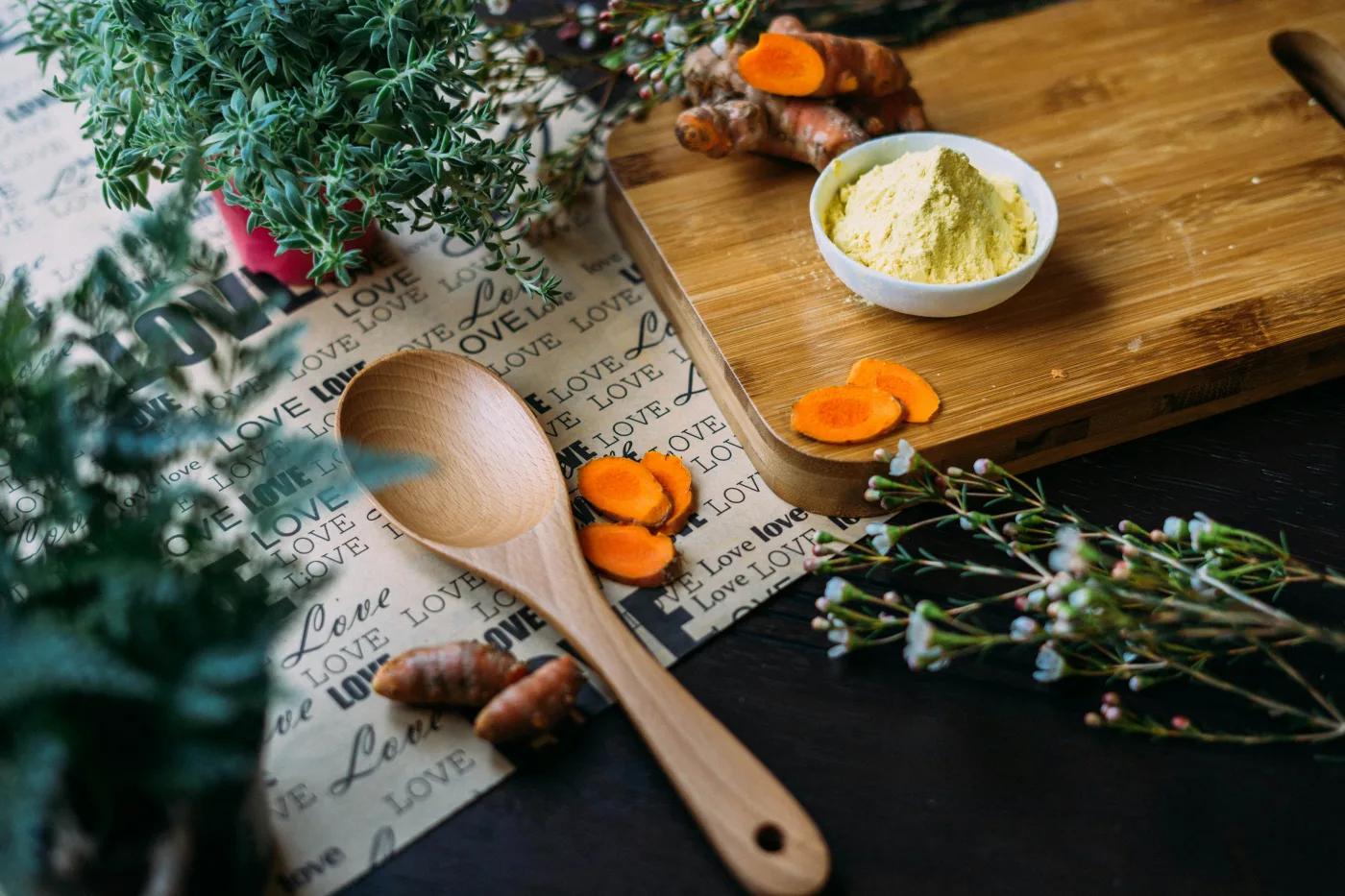
In This Article
- The Superbug That Antibiotics Can't Always Stop
- A Different Strategy: Disarm, Don't Kill
- How Does a Spice Compound Block a Deadly Bacteria?
- What This Means for Patients — and Indian Kitchens
- What Scientists Still Need to Figure Out
Every year, drug-resistant bacteria quietly kill hundreds of thousands of people worldwide — and one of the worst offenders lives on your skin right now. Researchers at the University of Guelph have just found something remarkable: a natural fatty acid hiding inside turmeric and ginger — two spices sitting in millions of Indian kitchens — can stop the deadliest strain of staph bacteria from gripping the human body. The findings, published in Nature Communications in April 2026, point toward a new kind of treatment that doesn't even try to kill the bug.
The Superbug That Antibiotics Can't Always Stop
Staphylococcus aureus — "staph" — is so common it barely sounds threatening. It sits harmlessly on the skin of about one in three people. But get a cut, go through surgery, or have a weakened immune system, and it can invade the body fast.
Its most dangerous form is MRSA — methicillin-resistant Staphylococcus aureus. This strain has developed the ability to shrug off most common antibiotics. Hospital patients, elderly people, and anyone with a compromised immune system are at serious risk. Globally, antimicrobial resistance is now responsible for over a million deaths a year — and MRSA is one of the biggest contributors.
A Different Strategy: Disarm, Don't Kill
Here's what makes this research so different from the usual antibiotic hunt. Most drugs try to kill bacteria outright. And that, ironically, is part of the problem. When you hit bacteria with a killing drug, the ones that survive are the toughest — they breed, pass on their resistance, and create a stronger generation. It's an arms race that bacteria keep winning.
Dr. Georgina Cox, Canada Research Chair in Antimicrobial Resistance at Guelph, is working on a smarter approach. Her team — including Dr. Allison Leonard, a recent PhD graduate, and PhD student Ruina Bao — is developing what researchers call "anti-adhesives." Instead of killing bacteria, these compounds stop them from sticking to the body in the first place. No attachment, no infection.
How Does a Spice Compound Block a Deadly Bacteria?
Using a high-throughput screening method developed in Cox's lab — along with facilities at McMaster University's Centre for Microbial Chemical Biology — the team tested nearly 4,000 bioactive compounds for their ability to stop staph from binding to human tissue.
One compound stood out clearly: geranylgeranoic acid, or GGA. It's a naturally occurring fatty acid found in plants like ginger and turmeric. And it turns out, it can disrupt MRSA in several ways at once. GGA made it harder for the bacteria to grip proteins on human skin and in the bloodstream. It also interfered with the bacteria's "sensing" system — the ability to detect and respond to its surroundings. Essentially, the compound made the bacteria confused and unable to anchor itself.
When the team tested GGA in mice — in collaboration with researchers at Western University — it prevented skin lesions caused by staph from forming, and reduced the severity of infections that were already developing.
"Bacteria are so innovative in the ways they resist that we have to also be innovative in the strategies to control them."
— Dr. Georgina Cox, University of Guelph · Nature Communications, 2026What This Means for Patients — and Indian Kitchens
Now, this is where it gets really interesting. GGA comes from ginger and turmeric — the same spices that have been used for centuries in Indian cooking and home remedies. When you drink hot ginger-lemon tea while you're sick, or eat a turmeric-laced dal, you're already consuming traces of this compound. Ruina Bao, the PhD student who worked on the study, put it plainly: these are spices "you already think of when you're sick."
But let's be clear about what this research does and doesn't say. Eating more turmeric or ginger is not a treatment for MRSA. The compound needs to be studied much further — the right dose, the right delivery method, and how it behaves in actual human patients are all still unknown. What this study shows is that GGA has real potential as the basis for a new kind of drug.
For India specifically, where antibiotic resistance is a serious and growing public health crisis, anti-adhesive treatments could be transformative. Hospitals here see high rates of drug-resistant infections, and alternative treatment strategies are badly needed.
What Scientists Still Need to Figure Out
The team at Guelph is far from done. Future studies will continue testing GGA in animal models, and they're also interested in related compounds — like oleic acid, found in olive oil — that might work similarly. There's a broader question too: can diet itself play a preventive role against bacterial infections? That's a tantalising line of research the team wants to pursue.
Anti-adhesives are already moving toward clinical trials in the United States. Similar compounds called mannoside-type blockers — which prevent E. coli from attaching to the urinary tract — are already being studied in human patients. GGA, if it holds up through further testing, could follow a similar path.
Cox is careful not to oversell it. Anti-adhesives won't replace classic antibiotics. But they could become a powerful addition to the toolkit — especially as traditional antibiotics continue to lose their edge against bacteria that just keep adapting.
- Disarming beats killing — Anti-adhesive compounds like GGA stop bacteria from attaching to the body rather than trying to kill them, which may reduce the development of drug resistance.
- GGA is real, and it works in mice — The compound was shown to prevent MRSA skin infections in animal models, a meaningful step toward future drug development.
- Kitchen spices, serious science — The fact that GGA comes from turmeric and ginger doesn't mean eating them cures MRSA, but it does make GGA a promising, naturally sourced starting point for a new class of treatment.
"Anti-adhesives have a lot of potential, and we really must start thinking of more unusual approaches to control bacteria than just simply going after growth." — Dr. Georgina Cox, University of Guelph, Nature Communications, 2026.
📄 Source & Citation
Primary Source: Leonard AC, Bao R, Menjivar C, Myers MJ, Paiva TO, Zheng Z, Berry KA, Bayles KW, Flannagan RS, Dufrêne YF, Bose JL, Heinrichs DE, Cox G. (2026). An anti-adhesive compound modulating the production of Staphylococcus aureus cell wall-anchored proteins. Nature Communications. Published 15 April 2026. https://doi.org/10.1038/s41467-026-71917-8
Authors & Affiliations: Allison C. Leonard, Ruina Bao, and Dr. Georgina Cox (University of Guelph, Department of Molecular and Cellular Biology); collaborators at Western University and McMaster University's Centre for Microbial Chemical Biology.
Funding: Canadian Institutes of Health Research; Canadian Foundation for Innovation.
Data & Code: Available through the Nature Communications online portal and supplementary materials linked via DOI above.
Key Themes: Antibiotic Resistance · MRSA · Anti-Adhesive Compounds · Natural Fatty Acids · Staphylococcus aureus
Supporting References:
[1] Murray CJ et al. (2022). Global burden of bacterial antimicrobial resistance in 2019: a systematic analysis. The Lancet, 399(10325):629–655.
[2] Guiton PS et al. (2012). Combinatorial small-molecule therapy prevents uropathogenic Escherichia coli catheter-associated urinary tract infections in mice. Antimicrobial Agents and Chemotherapy, 56(9):4738–4745.
[3] Krachler AM, Orth K. (2013). Targeting the bacteria–host interface: strategies in anti-adhesion therapy. Virulence, 4(4):284–294.
No comments yet. Be the first to share your thoughts.
Leave a Comment