 Dr. Raj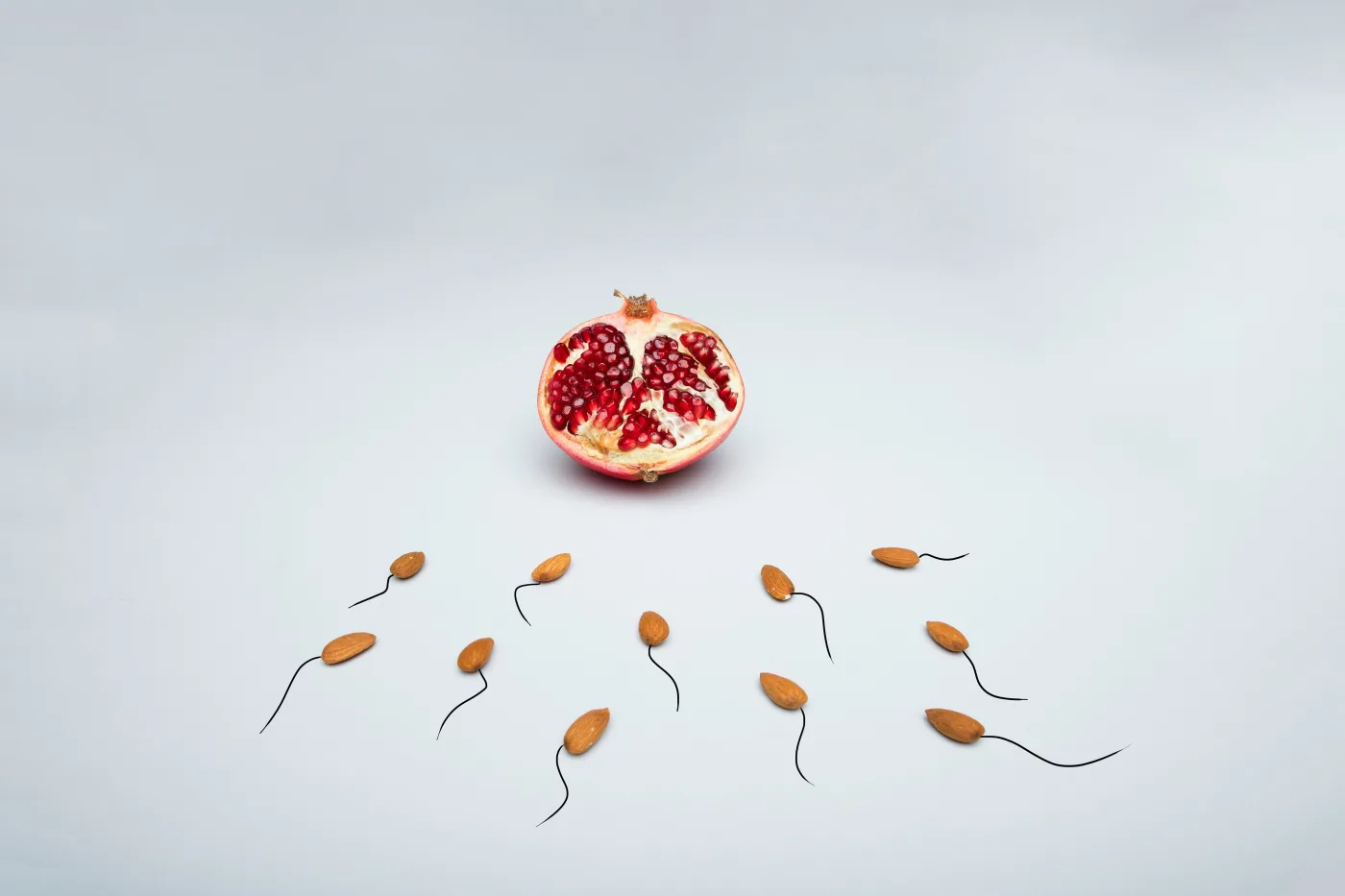
In This Article
- The Holy Grail That's Been Elusive for Decades
- Why Hormonal Approaches Kept Failing Men
- How Does the JQ1 Molecule Actually Stop Sperm Production?
- What Happened When Scientists Turned Fertility Back On
- The Road From a Mouse Lab to a Medicine Cabinet
For decades, the question has nagged at reproductive scientists like a puzzle with a missing piece: why can women choose from a dozen contraceptive options — pills, patches, injections, implants — while men are stuck with condoms or a surgeon's scalpel? A team at Cornell University may have just found the answer to that question, and it comes in the form of a tiny molecule that acts like a light switch for male fertility. Their six-year study, published in April 2026 in the Proceedings of the National Academy of Sciences, is the first solid proof that sperm production can be safely shut down — and fully restored — by targeting the biology of sperm creation itself.
The Holy Grail That's Been Elusive for Decades
Scientists have been chasing a reversible, nonhormonal male contraceptive for so long that the field developed its own shorthand for the goal: the "holy grail" of male birth control. The aspiration is straightforward — a method that is safe, long-acting, highly effective, and doesn't permanently alter a man's reproductive capacity. The execution has been anything but simple.
For most of modern medicine's history, men's contraceptive options have been binary: either use a barrier method in the moment, or opt for a vasectomy — technically reversible, but often treated as permanent. The gap between those two extremes has remained frustratingly wide, not for lack of scientific interest, but because the male reproductive system presents a genuinely difficult engineering problem.
Why Hormonal Approaches Kept Failing Men
The most obvious route — a male hormonal contraceptive, parallel to the female pill — has been explored repeatedly and repeatedly abandoned. Testosterone-based trials in the 1990s and 2000s showed genuine effectiveness at suppressing sperm, but participants reported depression, mood swings, and other side effects that caused clinical programmes to halt. Ironically, these were the same side effects that plagued early female hormonal contraceptives in the 1960s — side effects that were ultimately deemed acceptable for women but not for men.
Beyond the politics of that double standard, there's a deeper biological problem: hormones are messengers that travel the entire body. Flooding a man's system with synthetic androgens to suppress sperm affects far more than just the testes. The Cornell team's approach sidesteps this entirely by targeting the testes directly, at the cellular mechanics of sperm creation itself.
How Does the JQ1 Molecule Actually Stop Sperm Production?
Think of sperm development as a factory assembly line with multiple stations. The Cornell team, led by Professor Paula Cohen of the College of Veterinary Medicine, focused on one very specific station: a stage called prophase I, which sits early in meiosis. Hit that checkpoint, and the entire downstream line grinds to a halt — no finished product leaves the factory. Miss it, and viable sperm might still slip through.
To hit that target, they used a small molecule called JQ1 — originally developed as a research tool for studying cancer and inflammatory disease. JQ1 disrupts prophase I in two ways: it kills cells at that meiotic stage, and it simultaneously blocks the gene expression needed for the next phase of sperm development, a process called spermiogenesis. The researchers were careful to intervene early enough that the spermatogonial stem cells — think of these as the factory's master blueprint — remained completely unharmed. Those stem cells are the key to fertility recovery.
Male mice received JQ1 for three weeks. During that window, sperm production ceased entirely. Chromosome behaviour during prophase I — the molecular choreography that meiosis depends on — was disrupted across the board. Zero viable sperm. The male birth control effect was complete.
"It shows that we recover complete meiosis, complete sperm function, and more importantly, that the offspring are completely normal."
— Paula Cohen, Cornell University · Proceedings of the National Academy of Sciences, 2026What Happened When Scientists Turned Fertility Back On
This is where the research moves from interesting to genuinely exciting. Six weeks after JQ1 was withdrawn, normal meiosis resumed. The mice recovered sperm production, regained fertility, and successfully produced pups. Those pups were then bred to the next generation — and that offspring, too, was completely healthy. No genetic damage. No lasting reproductive harm. The on-switch worked as cleanly as the off-switch.
That reversibility matters enormously, and it's not accidental. The Cornell team made a deliberate strategic choice: target only the meiotic checkpoint, not the stem cells. "We didn't want to impact the spermatogonial stem cells," Cohen noted, "because if you kill those, a man will never become fertile again." The precision here isn't just scientifically elegant — it's the difference between a temporary contraceptive and a permanent one.
If this approach eventually translates to humans, Cohen has suggested it could be delivered as an injection every three months, or possibly as a patch — a delivery format that mirrors how some women's contraceptives already work, and one that could support consistent, reliable use without daily pills.
The Road From a Mouse Lab to a Medicine Cabinet
It's worth being clear about where this research sits on the long road from discovery to pharmacy shelf: this is a proof-of-principle study in mice. That's an important milestone, not a finish line. Mice and men share the fundamentals of meiosis, which is why this model is scientifically valid — but the leap to human biology introduces complexity that no mouse study can fully anticipate.
JQ1 itself will not become the drug. The Cornell team has identified three new gene candidates they believe could be targeted more cleanly, without neurological side effects, and they plan to launch a company within two years to accelerate that development. Human trials, if and when they begin, would still require years of safety data before any regulatory body would consider approval. A conservative estimate puts a real-world male birth control based on this approach at least a decade away — possibly longer.
What this study does change, right now, is the scientific conversation. For years, sceptics argued that targeting the testes directly was too risky — that you couldn't interrupt sperm production without causing permanent damage. Cornell's data says otherwise. The logic has been proven. The specific molecule can be improved. And perhaps most importantly, the research community now has a validated target: prophase I of meiosis.
- Reversibility is real — The study proved that completely halting sperm production does not mean permanent infertility; the stem cells that drive recovery can be preserved if the intervention is precise enough.
- Hormones aren't the only path — A nonhormonal approach avoids the systemic side effects that have derailed previous male contraceptive trials, opening a genuinely new avenue for development.
- The target is now confirmed — Prophase I of meiosis is a validated checkpoint for contraception; even if JQ1 is replaced, future molecules now have a clear biological destination.
"We're practically the only group pushing the idea that contraception targets in the testis are a feasible way to stop sperm production." — Paula Cohen, Cornell University · Proceedings of the National Academy of Sciences, 2026.
Frequently Asked Questions
- What is the male birth control breakthrough from Cornell University?
- Cornell scientists showed a molecule called JQ1 can completely halt sperm production in mice by interrupting meiosis. Fertility fully recovered within six weeks and offspring were healthy.
- Is this reversible male birth control safe?
- Fertility returned fully after treatment ended with no lasting harm detected. However, JQ1 has neurological side effects and is not yet viable for humans.
- How does the male contraceptive molecule JQ1 work?
- JQ1 disrupts meiosis at prophase I, stopping developing sperm from maturing without permanently damaging the stem cells that restore fertility later.
- When could reversible male birth control be available for humans?
- The Cornell team plans to launch a company within two years, but human trials and regulatory approval could take over a decade.
📄 Source & Citation
Primary Source: Tanis S, Simon LE, Alexander AK, Horan TS, de las Mercedes Carro M, Bonnett SJ, Xie A, Ben-Shlomo R, Owens CE, Danko CG, Lujic J, Cohen PE. (2026). Meiotic prophase I disruption as a strategy for nonhormonal male contraception using small-molecule inhibitor JQ1. Proceedings of the National Academy of Sciences, 123(15). https://doi.org/10.1073/pnas.2517498123
Authors & Affiliations: Stephanie Tanis & Leah E. Simon (lead authors), Paula E. Cohen (senior author) — Cornell University College of Veterinary Medicine, Ithaca, NY. Collaborating authors from Cornell Reproductive Sciences Center.
Data & Code: Supplementary data and molecular parameters available via PNAS online repository at the DOI above.
Key Themes: Male Contraception · Meiosis · Nonhormonal Reproductive Medicine · Spermatogenesis · Reproductive Genetics
Supporting References:
[1] Cornell Chronicle. (2026). Breakthrough takes big step toward safe, reversible male contraception. news.cornell.edu
[2] ScienceDaily. (2026). Scientists discover reversible male birth control that stops sperm production. sciencedaily.com
[3] Earth.com. (2026). Contraception breakthrough hits pause on sperm production. earth.com
[4] NYU Institute for Family Planning. (2026). Scientists discover reversible male birth control that stops sperm production. ifp.nyu.edu
No comments yet. Be the first to share your thoughts.
Leave a Comment