 Sanjay Verma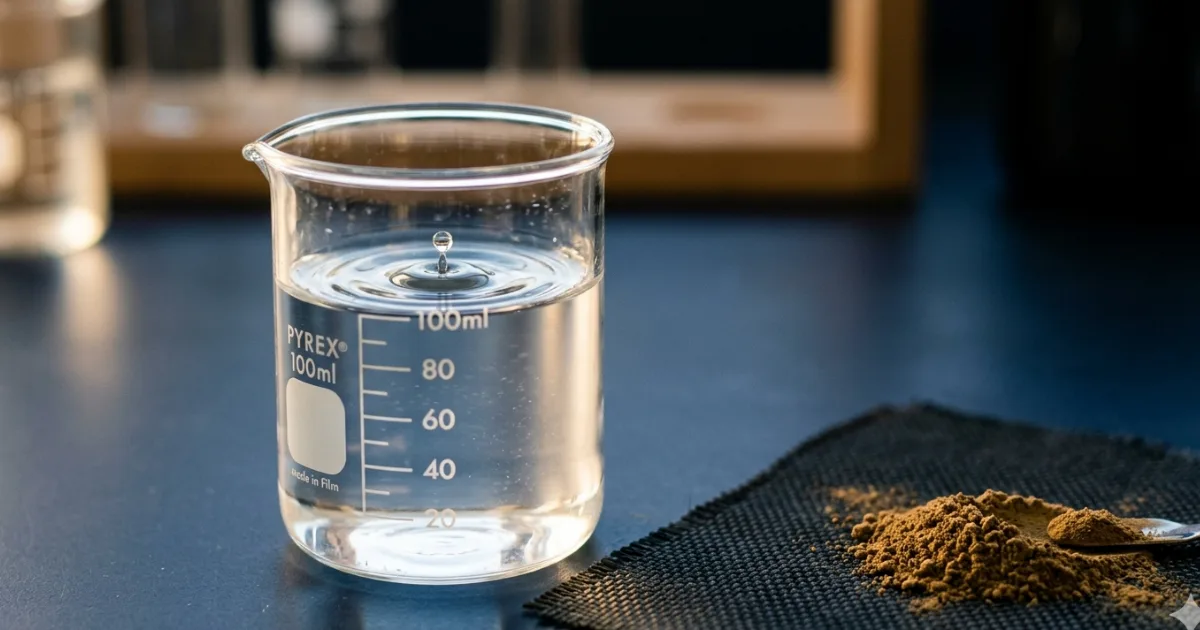
In This Article
- The Battery Problem Nobody Talks About
- Why pH Is the Hidden Enemy of Battery Design
- How Did Scientists Build a Battery That Runs on Tofu Brine?
- What This Breakthrough Could Mean for Clean Energy
- The Questions That Still Need Answering
Picture the liquid inside a typical car battery and you have sulphuric acid corrosive enough to burn through fabric. Now picture the liquid a Chinese tofu maker uses to firm up soybean curd — a pinch of magnesium or calcium chloride dissolved in water. Researchers at City University of Hong Kong have just published a study in Nature Communications showing you can build a powerful, long-lasting neutral electrolyte battery out of that second liquid — and throw the spent electrolyte away without a second thought.
The Battery Problem Nobody Talks About
Every rechargeable battery eventually dies. What we rarely ask is: where does the chemistry go afterwards? For most aqueous batteries — the kind that store energy in water-based solutions rather than flammable organic solvents — the answer is quietly uncomfortable.
Lead-acid batteries, the workhorses still under most car bonnets, contain sulphuric acid at a pH close to 1. Zinc-ion batteries, the darlings of the next-generation energy storage world, run in mildly acidic electrolytes hovering around pH 3.4 to 4.5. Nickel metal hydride batteries sit at the other extreme, bathing in potassium hydroxide at a stinging pH of 14. None of these fluids are things you would want leaching into a landfill, a river, or a water table.
This is not a small problem. The global battery market is forecast to exceed several trillion dollars by 2040, and the vast majority of that installed capacity will eventually need disposal. A review in Nature Reviews Materials identifies electrolyte management as one of the central unsolved challenges in designing truly green energy storage.
Why pH Is the Hidden Enemy of Battery Design
pH is a measure of how acidic or alkaline a solution is, running from 0 (battery acid) to 14 (drain cleaner), with pure water sitting at a perfectly neutral 7. In battery terms, straying away from that midpoint creates two nasty problems.
First, acidic or alkaline electrolytes corrode electrode materials faster, shortening the battery's usable life to a few hundred or a few thousand charge cycles. Second, they supercharge a process called the hydrogen evolution reaction — in plain English, the electrolyte quietly decomposes, making hydrogen gas, consuming water, and degrading performance with every cycle. Batteries operating far from pH 7 are essentially fighting their own electrolyte on every charge.
The obvious fix — simply making the electrolyte neutral — sounds simple but had never been achieved with stable, high-performing electrode materials. Most organic compounds that store charge well either dissolve in water or need acidic conditions to function. What the Hong Kong team did was engineer a material that actually thrives at pH 7, storing magnesium or calcium ions rather than the protons that destabilise everything at lower pH values.
How Did Scientists Build a Battery That Runs on Tofu Brine?
The researchers synthesised three types of covalent organic polymers (COPs) — essentially plastic-like molecular networks designed to grab and release metal ions — and compared how each performed in neutral electrolytes. The key variable was the type of chemical bond linking the polymer's building blocks: electron-withdrawing, electron-neutral, or electron-donating.
The winner, by a significant margin, was the electron-donating version: a brown powder called Hex-TADD-COP, formally known as Hexaketone-tetraaminodibenzo-p-dioxin covalent organic polymer. Compared to the other two variants, it showed the most negative reduction potential (−0.67 V), meaning it can store energy at a lower voltage — crucial for maximising the gap between the two electrodes in a full battery cell. It also had the smallest "full width at half maximum" in its electrochemical signal, a fingerprint of fast, clean, reversible reactions.
The team traced this to basic physics. The electron-donating bonds funnel charge density specifically toward nitrogen atoms in the polymer's pyrazine rings — the active spots where magnesium or calcium ions actually bind during discharge. Higher charge density there means ions snap in and snap out faster, like a perfectly fitted lock-and-key rather than a sticky latch. Critically, in situ Raman spectroscopy and X-ray photoelectron spectroscopy confirmed the process is fully reversible: the C=N bonds at those active sites changed during charge and discharge, then returned to exactly their starting state, cycle after cycle. According to the published paper, in a neutral MgCl₂ electrolyte adjusted to pH 7.0, the material retained 72.67% of its capacity after a remarkable 120,000 cycles.
"The full cells are environmentally benign and nontoxic and can be directly discarded to environments according to various standards — GB 18599-2020, ISO 14001, Resource Conservation and Recovery Act RCRA, US."
— Chen et al., City University of Hong Kong · Nature Communications, 2026One of the more striking findings involved protons — hydrogen ions — which normally play a supporting role in aqueous battery charge storage. In acidic electrolytes, protons contribute substantially to capacity but wreak havoc on cycle life, promoting the hydrogen evolution reaction and eventually forming magnesium hydroxide precipitate that clogs the electrode surface. At pH 7.0, proton participation dropped to just 0.51% of total charge storage. The battery essentially learned to work without them, and the electrode surface stayed pristine.
What This Breakthrough Could Mean for Clean Energy
To test the chemistry in a real device, the team paired the Hex-TADD-COP negative electrode with a Prussian blue analog positive electrode (CuFe-PBA), a well-studied material used across several battery chemistries. The resulting full cell spanned a voltage window of 2.2 V — wider than most comparable aqueous systems — and delivered a specific energy of up to 48.3 Wh/kg calculated across the total mass of both electrodes and the electrolyte. That figure is competitive with reported magnesium and calcium metal negative electrode full cells, which typically rely on problematic non-aqueous electrolytes.
The environmental side of the story is just as significant. After the cycling tests, the researchers analysed the spent electrolyte and found only magnesium, calcium, chloride, carbon, and copper — no heavy metals, no toxic residues. Since magnesium and calcium are naturally abundant in soil worldwide, the electrolyte meets international standards for direct environmental discard, including ISO 14001 environmental management guidelines and the US Environmental Protection Agency's Resource Conservation and Recovery Act (RCRA) criteria. Most existing battery electrolytes fail these tests outright.
For large-scale grid storage — the kind needed to buffer the output of solar and wind farms — the ability to dispose of spent electrolyte safely and cheaply without costly hazardous-waste processing is a genuinely practical advantage. India alone is targeting 500 GW of renewable capacity by 2030, per the International Energy Agency, which means enormous quantities of grid storage batteries will eventually need replacing. An aqueous neutral electrolyte battery that can simply be drained and recycled for its polymer content changes the end-of-life economics substantially.
The Questions That Still Need Answering
This research, for all its promise, is still early-stage. The electrodes tested were small laboratory cells — just one square centimetre of active material — and the highest-loading pouch cells demonstrated around 3,000 cycles, far short of the 120,000 achieved at low loading. Scaling electrode fabrication while preserving the neutral electrolyte battery's exceptional cycle life is a non-trivial manufacturing challenge that the authors acknowledge needs further work.
The specific energy of 48.3 Wh/kg, while competitive for this class of system, is still well below the 150–250 Wh/kg delivered by lithium-ion batteries. This means the new system is unlikely to power electric vehicles any time soon; its natural home is stationary grid storage, where energy density matters less than lifetime cost and environmental footprint. The voltage window of 2.2 V is also still below what many grid applications demand, and the search for better-matched positive electrode materials continues.
What the researchers have undeniably demonstrated is the principle: you can build a neutral electrolyte battery that is simultaneously high-performing, ultra-stable, and environmentally disposable — three qualities that have never coexisted in a single aqueous system before.
- Neutral pH eliminates side reactions — Operating at pH 7 suppresses the hydrogen evolution reaction almost entirely, extending cycle life to 120,000 and keeping the electrode surface clean throughout.
- Electron-donating bonds are the design key — The specific chemistry of the linking bonds in the polymer controls charge density at the active site, and getting this right is what separates 120,000-cycle stability from the 600 cycles seen at pH 2.5.
- Disposability is a serious design goal — For the first time, an aqueous rechargeable battery system meets multiple international standards for direct environmental discard, shifting end-of-life management from a liability to a non-event.
"Our findings represent a considerable advancement in the development of neutral electrolyte-compatible negative electrode materials, offering a safer, high-performance, long-lasting, and environmentally sustainable energy storage solution." — Chen et al., Nature Communications, 2026.
📄 Source & Citation
Primary Source: Chen H, Feng S, Wang Y, et al. (2026). An aqueous battery using an electrolyte with a pH of 7 and suitable for direct environmental discard. Nature Communications, 17, 2895. https://doi.org/10.1038/s41467-026-69384-2
Authors & Affiliations: Hui Chen, Shuo Feng, Chunyi Zhi & Haiming Lv Lyu (City University of Hong Kong; Songshan Lake Materials Laboratory; Yan'an University)
Data & Code: Source data available with the published paper; supplementary DFT structural files provided via the journal's online repository.
Key Themes: Aqueous Batteries · Neutral Electrolytes · Covalent Organic Polymers · Magnesium-Ion Storage · Battery Disposal & Sustainability
Supporting References:
[1] Liang Y & Yao Y (2023). Designing modern aqueous batteries. Nature Reviews Materials, 8, 109–122.
[2] Palacin MR et al. (2024). Roadmap on multivalent batteries. Journal of Physics: Energy, 6, 031501.
[3] Yang J et al. (2017). Review on the research of failure modes and mechanism for lead–acid batteries. International Journal of Energy Research, 41, 336–352.
No comments yet. Be the first to share your thoughts.
Leave a Comment