 Krishan Gopal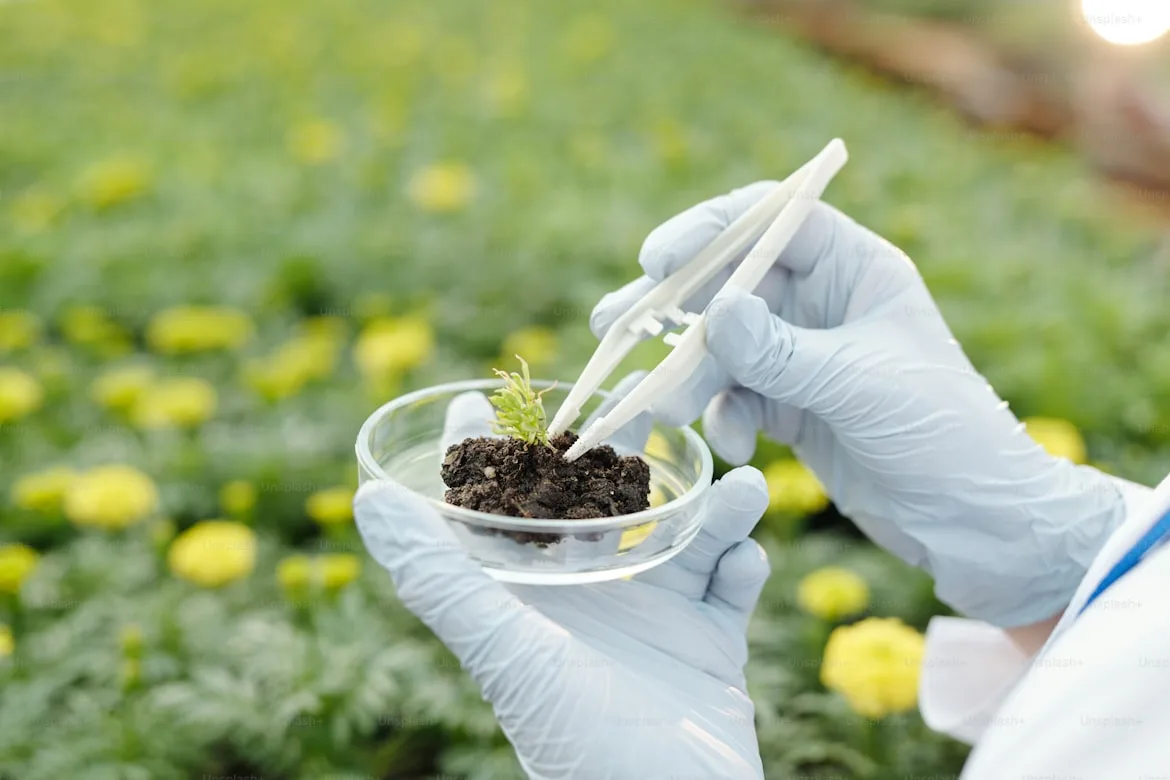
In This Article
- The Flower You Never Thought of as Food
- How Scientists Extracted the Proteins
- Why Does Marigold Protein Beat Pea and Chickpea in Heat?
- What This Could Mean for Your Food
- What Still Needs to Happen Before It Reaches Shelves
Think about the last time you saw marigold flowers. Maybe at a temple. Maybe at a wedding. Beautiful, bright orange — and then, a few days later, thrown away. Now scientists are saying: wait. Don't throw those away just yet. A new study has found that the humble marigold flower is packed with something really useful — protein. Not just any protein, but one that stays strong even when you cook it at very high heat. The research was published in ACS Food Science & Technology, and it's changing how experts think about this everyday flower.
The Flower You Never Thought of as Food
Marigolds are one of the most common flowers in India. You see them at every festival, every puja, every wedding. Farmers grow them in huge fields across Karnataka, Tamil Nadu, and Andhra Pradesh. But here's the thing — once the garland is offered or the decoration is done, most of those flowers end up in a garbage pile.
A food scientist named Anand Mohan from the University of Connecticut looked at this and thought: that's a lot of waste. In fact, around 40 out of every 100 marigold flowers grown in the world are simply thrown away. Mohan's team asked a simple question — is there something good inside these flowers that we are missing?
Turns out, yes. Quite a lot, actually.
How Scientists Got the Protein Out
The team took marigold flowers, dried them out completely, and ground them into a fine powder — a bit like how you would grind whole spices into masala. Then they mixed this powder with different liquids, one step at a time, to pull out the proteins hiding inside. They did this in four rounds, each one drawing out a slightly different type of protein.
What they found was exciting. Some of those proteins contain natural compounds that give food a deep, rich, savoury taste — the kind of flavour you get from ripe tomatoes, mushrooms, or a good biryani. So marigold protein wouldn't just add nutrition to a food product. It could actually make it taste better too.
Why Does Marigold Protein Beat Pea and Chickpea in Heat?
This is the part that really surprised the scientists. When they tested how well marigold protein holds up under heat, it stayed strong all the way up to 105 degrees Celsius. That is above the boiling point of water. Most other plant proteins — like pea protein and chickpea protein, which are already used widely in health foods and protein powders — start to fall apart at lower temperatures.
Why does this matter? Because when food companies make things like biscuits, bread, sauces, or ready-to-eat meals, ingredients go through very high heat during cooking and packaging. If the protein breaks down, you lose the nutritional benefit. Marigold protein doesn't break down. It keeps its shape and its goodness even after cooking.
There's one more thing. Two of the protein extracts they tested could also work as an emulsifier — a word that just means it helps oil and water mix together smoothly. Think of how a good salad dressing stays creamy instead of separating into a puddle of oil. That ability makes it very useful for making mayonnaise, creamy sauces, and plant-based milk alternatives.
"Marigold flowers are widely cultivated, yet an estimated 40% of production is discarded as waste. We saw an opportunity to use this agricultural byproduct by exploring its protein content."
— Anand Mohan, University of Connecticut · ACS Food Science & Technology, 2026What This Could Mean for Your Food
So where could marigold protein actually end up? The research team is already thinking about baked goods like bread and biscuits, and pourable products like salad dressings and sauces. Marigold protein also has natural antioxidant properties — which is a fancy way of saying it helps food stay fresh for longer without needing artificial preservatives.
For India, this discovery is especially interesting. Our country grows enormous quantities of marigolds, and farmers don't currently earn anything from the flowers that go unsold or get discarded after festivals. If those leftover flowers could be processed into a food ingredient and sold to food companies, farmers could earn extra income from something they were throwing away for free. That's a real, practical benefit — not just a science experiment.
Worldwide, food companies are already looking for alternatives to soy and pea protein because those crops have their own challenges. A heat-stable, tasty option from a widely available flower? That's exactly the kind of thing the industry is hunting for.
What Still Needs to Happen Before It Reaches Shelves
To be clear — this is still early research. Scientists have tested the proteins in a lab. They haven't yet put marigold protein into an actual food product and asked real people to eat it and give feedback. That is the next step. The team plans to bake it into bread and mix it into dressings, then run taste tests to see what people think.
There are also practical questions that need answers. Can this extraction process be done cheaply enough to make business sense? Will any people be allergic to marigold protein? Do food safety authorities approve it? None of these are dealbreakers — but they all need proper testing before you'll see "marigold protein" on a food label at your local supermarket.
Still, the basic science is solid and genuinely exciting. A flower that millions of people use and discard every single day might one day be part of the food you eat. Science has a funny way of finding value in the things we least expect.
- Survives high heat — Marigold protein stays strong even at 105°C, which means it works well in cooking and baking — something pea and chickpea proteins struggle with.
- Turns waste into food — About 40% of all marigolds grown are thrown away. This research shows a way to use that waste as a real, nutritious food ingredient.
- Could taste good too — Natural compounds in marigold protein give food a rich, savoury flavour — meaning it could improve both the nutrition and the taste of everyday foods.
"People are increasingly aware of food waste and are looking for better solutions. Showing that something as common and overlooked as a flower can become a valuable food ingredient makes science feel real and useful." — Anand Mohan, ACS Food Science & Technology, 2026.
📄 Source & Citation
Primary Source: Benimana F, Alila N, Kawata K, Kucha C, Roy A, Mohan A. (2026). Assessing structural, thermal, and functional characteristics of marigold flower protein as a sustainable food ingredient. ACS Food Science & Technology. https://doi.org/10.1021/acsfoodscitech.5c01215
Authors & Affiliations: Fidele Benimana, Nancy Alila, Kentaro Kawata, Christopher Kucha, Anupam Roy, and Anand Mohan (corresponding author) — University of Connecticut. Funding support from the U.S. Department of Energy, Office of Science, Basic Energy Sciences.
Data & Code: Available via the ACS Publications online portal associated with the journal article DOI above.
Key Themes: Plant-Based Protein · Food Waste Valorisation · Sustainable Food Ingredients · Functional Food Science · Agricultural Byproducts
Supporting References:
[1] Boland M et al. (2013). The future supply of animal-derived protein for human consumption. Trends in Food Science & Technology, 29(1):62–73.
[2] McClements DJ et al. (2021). Plant-based proteins: The good, the bad, and the ugly. Advances in Food and Nutrition Research, 97:1–50.
[3] Ruttarattanamongkol K et al. (2015). Functional properties of protein concentrates and isolates from spent marigold flowers. Industrial Crops and Products, 65:76–82.
No comments yet. Be the first to share your thoughts.
Leave a Comment