 Sanjay Verma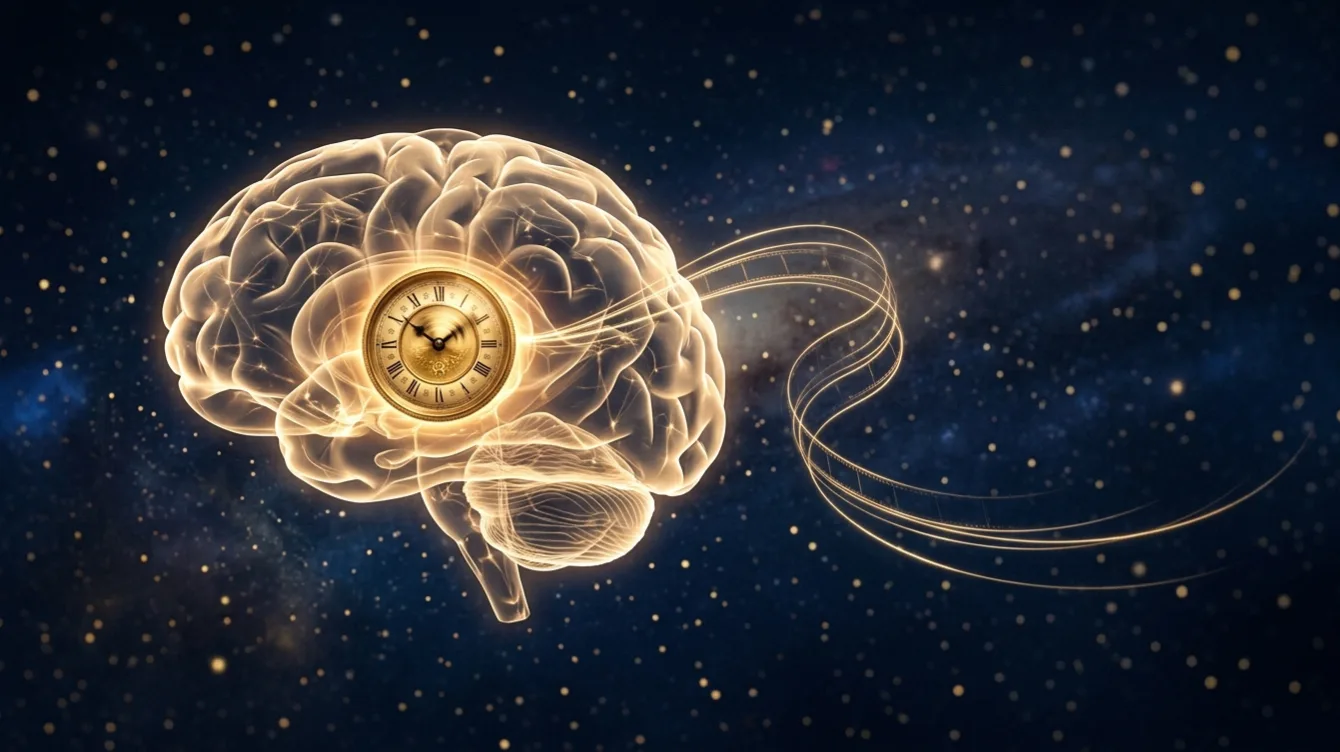
In This Article
- The Tiny Movie Player Inside Your Head
- The Cells That Map Every Place You Go
- Why Does Sleep Make Your Memory Stronger?
- Your Brain Edits the Past Without Telling You
- What Scientists Still Cannot Explain
Right now, while you read this, a small part of your brain is quietly rewinding your day like an old cassette tape. This is called memory replay, and it is not a guess. Scientists can actually listen to it happen, one brain cell at a time. Even stranger, your brain does not just play the past back. It also edits it, often without you ever knowing.
The Tiny Movie Player Inside Your Head
Think of a memory like a video clip. To remember it, your brain has to find that clip and press play. The brain does this by switching back on the same cells that were active when the event first happened. That is memory replay in simple words.
For a long time, no one knew the brain worked this way. Researchers knew memories were stored somewhere, but they could not watch a single memory being used. The brain stayed a closed box. Then one curious scientist plugged a speaker into a sleeping rat.
The Cells That Map Every Place You Go
Your brain has special cells that act like a built-in map. They sit in a curved brain area called the hippocampus, which is the part most linked to memory. Scientists often compare it to the GPS in your phone.
Two kinds of cells run this map. Place cells light up when you stand in one exact spot, like a pin on a map. Grid cells light up in a repeating pattern as you move, drawing invisible lines that tell you how far you have gone. Imagine the brain stretching graph paper over the whole room you are in.
This discovery was so important that John O'Keefe and the husband-wife team of May-Britt and Edvard Moser shared the 2014 Nobel Prize in Physiology or Medicine for it. But finding the map was only half the story. The real surprise was what those cells did at night.
Why Does Sleep Make Your Memory Stronger?
Here is the part that surprised even the researchers. A neuroscientist at the Massachusetts Institute of Technology, Matt Wilson, was recording brain signals from rats and sent those signals through a small speaker so he could hear them. The plan was simple. He just wanted to check his equipment was working.
Then the rat fell asleep, and the brain signals kept going. The same place cells that had fired while the rat ran a maze were firing again during sleep, in the same order. The rat was replaying its day in its dreams. Human brains do the very same thing.
This nightly replay is how memories get locked in for good, a process scientists call memory consolidation, where a fresh, fragile memory becomes a stable, lasting one. During deep sleep the hippocampus passes important memories to a tougher storage area called the cortex. So the next time you nap before a test, know this is no lazy habit. Your brain is hard at work filing away what you just learned.
"You recorded all this stuff, and then you're sitting in your studio in this offline state. Now you can go back. You can revisit. You can review. You can possibly edit these things."
— Matt Wilson, MIT · on memory replayYour Brain Edits the Past Without Telling You
Replay is not a perfect copy machine. Every time your brain plays a memory, it also rewrites it before putting it back in storage. Tiny details can be added, dropped, or quietly changed. A memory is less like a saved photo and more like a story you retell a little differently each time.
This sounds like a flaw, but it is actually useful. Your brain can take a piece of one memory and join it with a piece of another, even if those events happened on different days. By mixing old clips, it builds fresh ideas and makes better guesses about the future. The past becomes raw material for what comes next.
There is a catch, though. Because memories shift each time you recall them, the version you trust most may not be the most accurate one. Two people can stand in the same room, live the same moment, and walk away with two honestly different memories. Neither of them is lying.
What Scientists Still Cannot Explain
Researchers can now watch replay in animals, but big questions remain open. They are still not sure how the brain decides which memories are worth keeping and which ones fade away. They also do not fully know why some memories feel sharp for years while others blur in days.
Another open puzzle is how human replay differs from a rat's, since people remember not just places but ideas, feelings, and plans. As scientist Zhe Sage Chen of New York University points out, humans can even replay their way through abstract space, not just physical rooms. Understanding that fully could one day help treat memory loss and conditions like Alzheimer's disease.
- Replay is real and visible — Scientists can record the exact brain cells that rewind and replay a memory.
- Sleep does the filing — Your brain replays the day during sleep to turn weak memories into strong ones.
- Memories are living things — Each recall slightly rewrites the past, so no memory is ever a perfect copy.
"The memory itself is not storing something permanently. You read it out, and later you rewrite it back into the brain. So the information is dynamic. Everything is subjective." — Zhe Sage Chen, New York University.
So your memory is not a dusty photo album sitting untouched on a shelf. It is a story you are gently rewriting every single day of your life. And maybe that is a kind of gift. It means the past is never fully locked. You can always come back, look again, and understand it in a softer, wiser way than you did before.
📄 Source & Citation
Primary Source: Wilson MA, McNaughton BL (1994). Reactivation of hippocampal ensemble memories during sleep. Science, 265(5172), 676–679. https://doi.org/10.1126/science.8036517
Authors & Affiliations: Matt Wilson (Massachusetts Institute of Technology) and Zhe Sage Chen (New York University), with foundational work by John O'Keefe and May-Britt and Edvard Moser.
Data & Code: Findings drawn from peer-reviewed neuroscience studies on hippocampal place cells and replay; see linked journals for full datasets.
Key Themes: Memory replay · Hippocampus · Place cells · Sleep and memory · Episodic memory
Supporting References:
[1] O'Keefe J, Dostrovsky J (1971). The hippocampus as a spatial map. Brain Research, 34(1):171–175.
[2] Skaggs WE, McNaughton BL (1996). Replay of neuronal firing sequences in rat hippocampus during sleep following spatial experience. Science, 271(5257):1870–1873.
[3] Hafting T, Fyhn M, Molden S, Moser MB, Moser EI (2005). Microstructure of a spatial map in the entorhinal cortex. Nature, 436(7052):801–806.
No comments yet. Be the first to share your thoughts.
Leave a Comment