 Sanjay Verma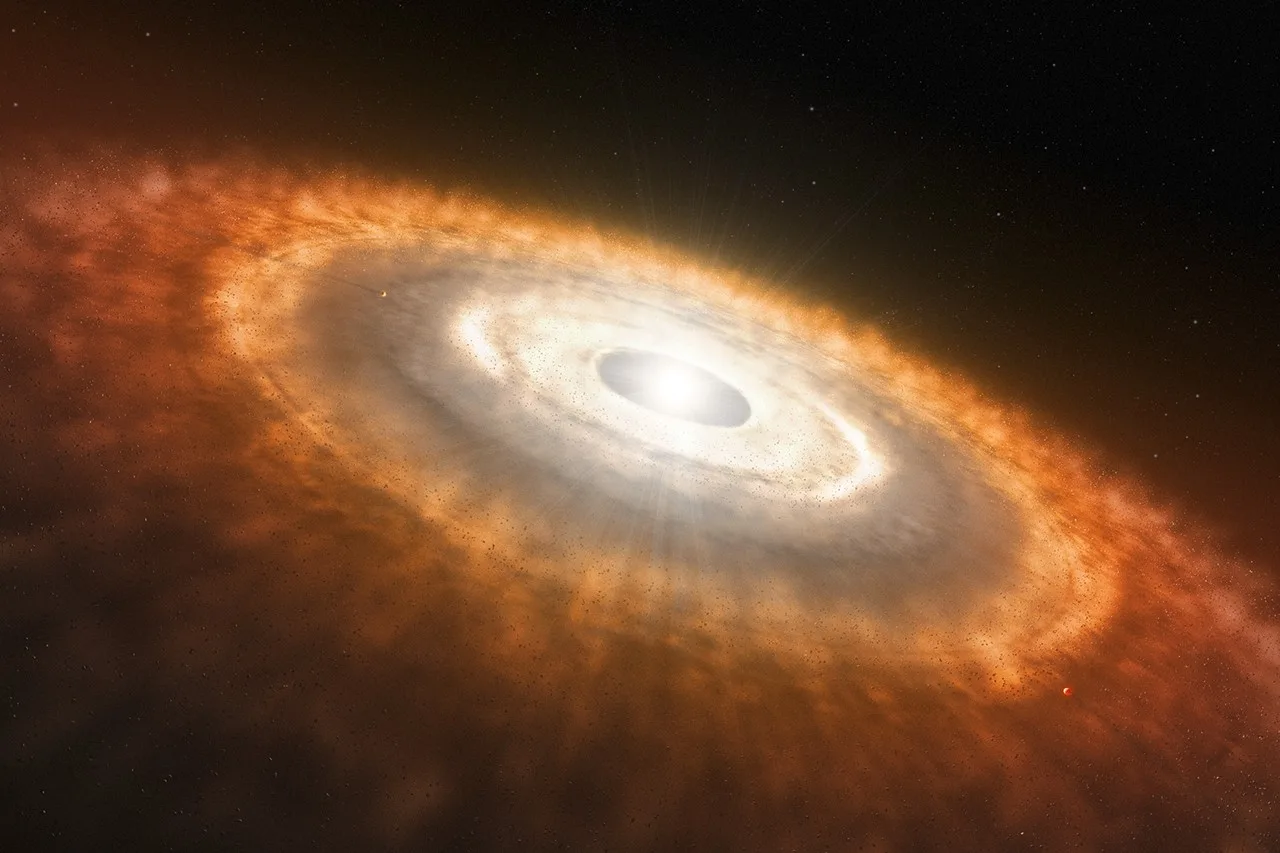
In This Article
- The Two Elements Every Living Thing on Earth Needs
- Where Scientists Thought These Elements Came From
- How Did Scientists Figure Out the Real Source?
- Jupiter: The Unexpected Gatekeeper of Life
- What This Means for Life Elsewhere in the Universe
Every cell in your body contains two elements that had to travel across space to reach Earth: phosphorus and nitrogen. Without them, no DNA could form, no protein could be built, no living thing could exist. For decades, scientists argued about where these elements came from — and a new study published in Science Advances has finally provided a clear answer. The life-essential elements needed for habitable planet formation came not from the distant, icy edges of the solar system, but from right next door.
The Two Elements Every Living Thing on Earth Needs
Think of your body as a very complicated machine. Like any machine, it needs specific parts to work. Two of the most important parts are nitrogen and phosphorus.
Nitrogen is found in proteins and in DNA — the molecule that carries all the instructions for building a living thing. Phosphorus forms the outer structure of DNA and helps cells produce energy. Every single living thing on Earth — from bacteria to blue whales — uses both of these elements every single day.
The early Earth started as a hot, rocky ball with no atmosphere and no oceans. For life to eventually appear, the planet needed a supply of nitrogen and phosphorus delivered to it during the wild, chaotic first billion years of solar system history. But the question that puzzled scientists for years was simple: where did that supply come from?
Where Scientists Thought These Elements Came From
Imagine trying to find out where a river starts by looking at the water flowing through a city. You can measure what is in the water, but tracing it back to the original spring takes careful detective work. That is exactly what scientists do when they study meteorites.
Meteorites are pieces of ancient space rock that have crashed onto Earth. Some are over 4.5 billion years old — older than Earth itself. They are like time capsules from the birth of our solar system. By studying them, scientists can figure out what the early solar system was made of and where different materials came from.
For a long time, many scientists believed Earth's phosphorus and nitrogen arrived late, delivered by chondrites — a type of stony space rock that formed in the cold outer parts of the solar system. The thinking was that these icy, rocky objects traveled inward and crashed into the young Earth, bringing life's ingredients with them. It was a tidy story. But the new data tells a very different one.
How Did Scientists Figure Out the Real Source?
The team at Rice University in Houston used two tools: laboratory experiments and computer models that simulate how chemicals mix in space. Their key measurement was simple but powerful — they looked at the ratio of phosphorus to nitrogen in two different types of ancient meteorites.
The first type, iron meteorites, are dense and metallic. They come from the very first generation of space rocks, called planetesimals, that formed right after the Sun switched on. The second type, chondrites, are stony and came from a second generation of planetesimals that appeared two to three million years later.
By mapping how the phosphorus-to-nitrogen ratio changed across different parts of the early solar system, the researchers built a detailed picture of where these elements were concentrated. The answer surprised even the researchers behind the study.
"The study suggests that Earth acquired its inventory of the life-essential elements phosphorous and nitrogen primarily from the inner solar system, without requiring a significant contribution from outer solar system chondrites."
— Debjeet Pathak, Rice University · Science Advances, 2026Earth's present-day chemical signature matches the rocks that formed close to it in the inner solar system — not the icy, distant chondrites from the outer edges. Earth did not need a long-distance delivery. The ingredients were local all along.
Jupiter: The Unexpected Gatekeeper of Life
But here is where the story gets truly interesting. If the inner solar system had more phosphorus and nitrogen available for Earth, something must have kept those elements from spreading outward. That something was Jupiter.
Jupiter is the largest planet in our solar system — so large that more than 1,300 Earths could fit inside it. Its gravitational pull is enormous. And in the early solar system, as Jupiter grew bigger and bigger, that pull started acting like a wall.
In the earliest stage of solar system formation, there was a natural outward flow of material. This pushed more phosphorus and nitrogen toward the outer solar system. But when Jupiter formed and reached its full, massive size, it blocked this flow. Phosphorus and nitrogen could no longer travel freely from the inner to the outer solar system. The result? When the second generation of space rocks formed, those in the inner solar system — the neighborhood where Earth was being built — had a higher concentration of life's key ingredients.
Rajdeep Dasgupta, senior author of the study at Rice University, put it directly: Jupiter's growth history seems to have played a critical role in determining the distribution of the basic chemical ingredients necessary for habitable worlds. He also raised a striking open question — whether a planet like Earth could get the right chemical ingredients without a giant planet like Jupiter nearby.
What This Means for Life Elsewhere in the Universe
This finding does more than explain Earth's past. It changes how scientists think about the search for life on other planets.
For years, astrobiologists — scientists who study the possibility of life beyond Earth — have focused heavily on whether a planet sits in the right temperature zone around its star to have liquid water. That remains important. But this study adds another factor to the checklist: did the planet form in a solar system where the chemistry worked out right?
- Local sources matter — Earth did not need faraway comets to deliver life's ingredients. The right chemistry was already close by, shaped by early solar system dynamics.
- Giant planets play a hidden role — A Jupiter-like planet may be necessary to concentrate life-essential elements near a potentially habitable world. Solar systems without a giant planet might miss this step.
- The recipe for life is specific — Getting the right elements to the right place at the right time requires a precise chain of events. Understanding that chain helps scientists know where to look for life beyond our solar system.
There are still open questions. Scientists do not yet know for certain whether every habitable planet needs a Jupiter-like neighbor. The study also acknowledges that geochemical models have limits — they reconstruct the past from chemical snapshots, and some details remain uncertain. But the direction of the evidence is clear.
"It remains an open question whether a life-essential element budget similar to Earth's can be established without a Jupiter-like planet in the population." — Rajdeep Dasgupta, Rice University, Science Advances, 2026.
Life on Earth did not happen by accident — but it also did not happen by magic. It happened because the right planet formed in the right place, with the right ingredients nearby, held in place by the gravity of a giant neighbor. That is not just the story of our past. It is a map for finding life's future — wherever it may exist.
📄 Source & Citation
Primary Source: Pathak D, Dasgupta R, et al. (2026). Phosphorus-to-nitrogen ratios in iron meteorites and chondrites constrain the origin of Earth's life-essential elements. Science Advances, published June 3, 2026. https://doi.org/10.1126/sciadv.aed8749
Authors & Affiliations: Debjeet Pathak (Rice University, Houston) and Rajdeep Dasgupta (Rice University, Houston). NASA-supported research.
Data & Code: Geochemical modelling data and laboratory experimental results available via the journal's supplementary materials at the DOI link above.
Key Themes: Astrobiology · Planetary Formation · Nitrogen Delivery · Phosphorus · Jupiter Influence
Supporting References:
[1] NASA Science — Original NASA coverage of this study, June 3, 2026.
[2] NASA Astrobiology Program Overview — science.nasa.gov/astrobiology
[3] NASA — Asteroids, Comets and Meteors explained, NASA Solar System Exploration.
No comments yet. Be the first to share your thoughts.
Leave a Comment