 Sanjay Verma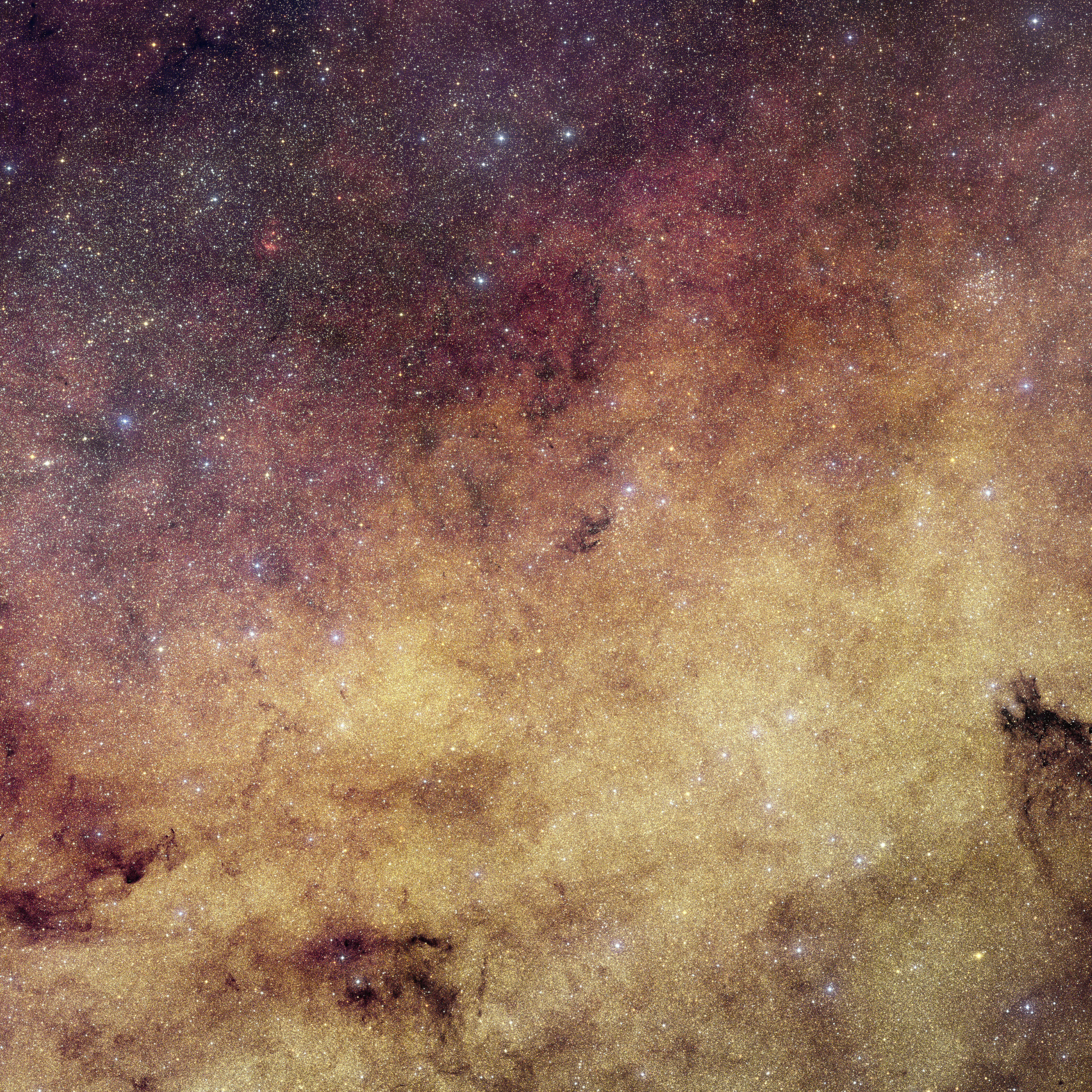
In This Article
- The Photograph That Stopped Scientists in Their Tracks
- Why the Centre of Our Galaxy Is So Hard to Study
- How Does Microlensing Find Invisible Objects in Space?
- What Roman Will Uncover — and Why Euclid's Head Start Matters
- The Questions Still Waiting for an Answer
Picture the sky above you filled with so many stars that you could not see the space between them. That is what the centre of our Milky Way galaxy looks like — and right now, two of the world's most powerful space telescopes are working together to stare straight into that blazing, crowded heart. The Milky Way galactic bulge survey planned by NASA's Nancy Grace Roman Space Telescope just got a remarkable head start, thanks to Europe's Euclid telescope pausing its own mission to photograph that same patch of sky.
The Photograph That Stopped Scientists in Their Tracks
In March 2025, the ESA Euclid mission did something it had never done before. It stopped its normal job of mapping the large-scale shape of the universe and spent one full day pointing its cameras at the busy, glittering centre of our own galaxy instead. The result was a sweeping image covering an area of sky equal to about 25 full moons placed side by side.
That one-day detour was no accident. Scientists knew that NASA's Roman telescope would soon begin a years-long survey of the same region. By capturing a preview image now, Euclid effectively added two bonus years of data to a survey that Roman will not begin until spring 2027.
Why the Centre of Our Galaxy Is So Hard to Study
Studying the centre of the Milky Way is a bit like trying to draw a map of the city you are standing in while blindfolded. You are inside the very thing you are trying to understand, with dust, gas, and countless stars blocking your view in every direction.
Thick clouds of dust that sit between Earth and the galactic core block visible light almost completely. This is why Roman will observe in infrared light — a kind of light that human eyes cannot see but that passes through dust far more easily, like how a radio signal travels through walls. Euclid's one-time observation, while shallower and missing some of the colour detail Roman will capture, still covers a larger area and has resolution similar to Roman's. Together they form a more complete picture than either could produce alone.
How Does Microlensing Find Invisible Objects in Space?
Here is where things get truly strange. Imagine you are watching a lamp at the end of a long corridor. Now imagine someone slowly walks in front of that lamp holding a giant magnifying glass. For a moment, the lamp looks brighter and bigger. Then the person walks past and it goes back to normal. That is almost exactly what microlensing does in space.
When a massive object — a star, a planet, or a black hole — passes in front of a more distant star, its gravity bends the distant star's light. The background star appears to glow brighter for a short time. Roman will watch hundreds of millions of stars continuously, waiting to catch these brief brightness spikes. Each spike is a clue that something massive just passed in front of that star, even if that something is otherwise completely invisible.
"Roman will also be able to detect planets orbiting stars, and all kinds of weird objects that are nearly impossible to find any other way."
— Matthew Penny, Louisiana State University · Co-lead, Euclid Exoplanet Science Working GroupPlanet microlensing signals last only hours or days. Black hole signals, however, can stretch across years, because a black hole packs so much mass into such a small space that it warps light across a much larger region. This is where Euclid's early photograph becomes especially valuable: scientists can now compare Roman's future images with Euclid's earlier snapshot to track how individual stars have slowly moved across the sky — which is exactly the information needed to confirm what caused a long microlensing event.
What Roman Will Uncover — and Why Euclid's Head Start Matters
Roman's five-year Milky Way galactic bulge survey will stare at a patch of sky about 8.5 full moons wide and photograph it over and over again. Scientists expect to find thousands of new planets this way — including a type that no other telescope has been able to detect in large numbers before.
These are rogue planets: worlds with no star to orbit. Picture Earth, but cut loose from the Sun and sent drifting alone through the cold dark of the galaxy forever. These objects form when young planets get gravitationally kicked out of their star systems, or perhaps when they form alone in deep space from the start. Most planet-hunting telescopes find worlds by watching them cross in front of their host star — a method that only works if the planet is very close to a star. Microlensing finds planets no matter where they are, making it the only reliable tool for catching rogues.
Himanshu Verma, a researcher at Louisiana State University who has been studying Euclid's images to prepare for Roman's survey, explains why the timing matters: the extra two years of baseline data give astronomers more time to watch a lens and its background star slowly drift apart after a microlensing event ends, which is the key step in measuring the mass of the object that caused it. Without knowing the mass, you cannot tell whether you are looking at a planet, a star, or a black hole.
The Questions Still Waiting for an Answer
Even with two powerful telescopes working together, some things remain difficult. Euclid's one-day snapshot is shallower than Roman's survey will be — meaning it picks up fewer faint, distant objects. It also lacks some of the infrared colour detail that Roman's instruments will capture, which matters for telling different types of stars apart. And the galactic centre itself, the very densest part, was left out of Euclid's image because its visible-light cameras cannot pierce the thick dust there the way Roman's infrared vision will.
There is also the challenge of identifying whether a planet found by Roman is truly rogue or simply orbiting a star from very far away. David Bennett, a senior researcher at the NASA Goddard Space Flight Center and the University of Maryland, notes that cross-referencing Euclid's earlier images with Roman's future detections will help scientists check whether any star sits near the spot where a microlensing event occurred — the crucial clue for distinguishing a lone wanderer from a distant orbiter.
- Two years of bonus data — Euclid's early snapshot effectively extends Roman's galactic bulge survey backwards in time, allowing scientists to track slow-moving black hole lensing events that would otherwise be missed.
- Rogue planets finally within reach — Roman will find planets drifting with no star to call home, a population that has been theorised for decades but never catalogued at scale.
- A new model for telescope teamwork — This collaboration shows that two missions designed for entirely different goals can produce science that neither was built to do alone.
"We've shown that these two telescopes can work together to do science that surpasses what either was originally designed for. In doing so, we've established a model for future coordinated observations that can unlock far more discoveries than either mission could make alone." — Jason Rhodes, NASA Jet Propulsion Laboratory, 2026.
For thousands of years, humans have looked up at the Milky Way as a smear of light and wondered what lay at its centre. Now two telescopes — one European, one American — are about to answer that question together, one brightness spike at a time. What they find there may rewrite what we know about how planets form, how black holes hide, and how full of invisible wandering worlds our galaxy really is.
📄 Source & Citation
Primary Source: Balzer, A. (2026). Euclid view of Milky Way heart previews core survey by NASA's Roman. NASA, Goddard Space Flight Center. https://www.nasa.gov/missions/roman-space-telescope/euclid-view-of-milky-way-heart-previews-core-survey-by-nasas-roman/
Authors & Affiliations: Ashley Balzer (NASA Goddard Space Flight Center); researchers cited include Jason Rhodes (NASA JPL), Matthew Penny (Louisiana State University), Himanshu Verma (Louisiana State University), David Bennett (University of Maryland / NASA Goddard).
Data & Code: Euclid image data available via the ESA Euclid Consortium. Roman survey planning documents at NASA Roman Science.
Key Themes: Galactic Bulge Survey · Microlensing · Rogue Planets · Stellar-mass Black Holes · Space Telescope Collaboration
Supporting References:
[1] Terry et al. (2026). Hubble galactic centre survey supporting microlensing reference frame. Adapted imagery cited in NASA release.
[2] NASA Roman Science Team (2026). Galactic plane survey overview. NASA Roman Space Telescope mission page.
[3] ESA Euclid Consortium (2025). Euclid galactic bulge observation, March 2025. ESA mission data archive.
No comments yet. Be the first to share your thoughts.
Leave a Comment