 Dr. Raj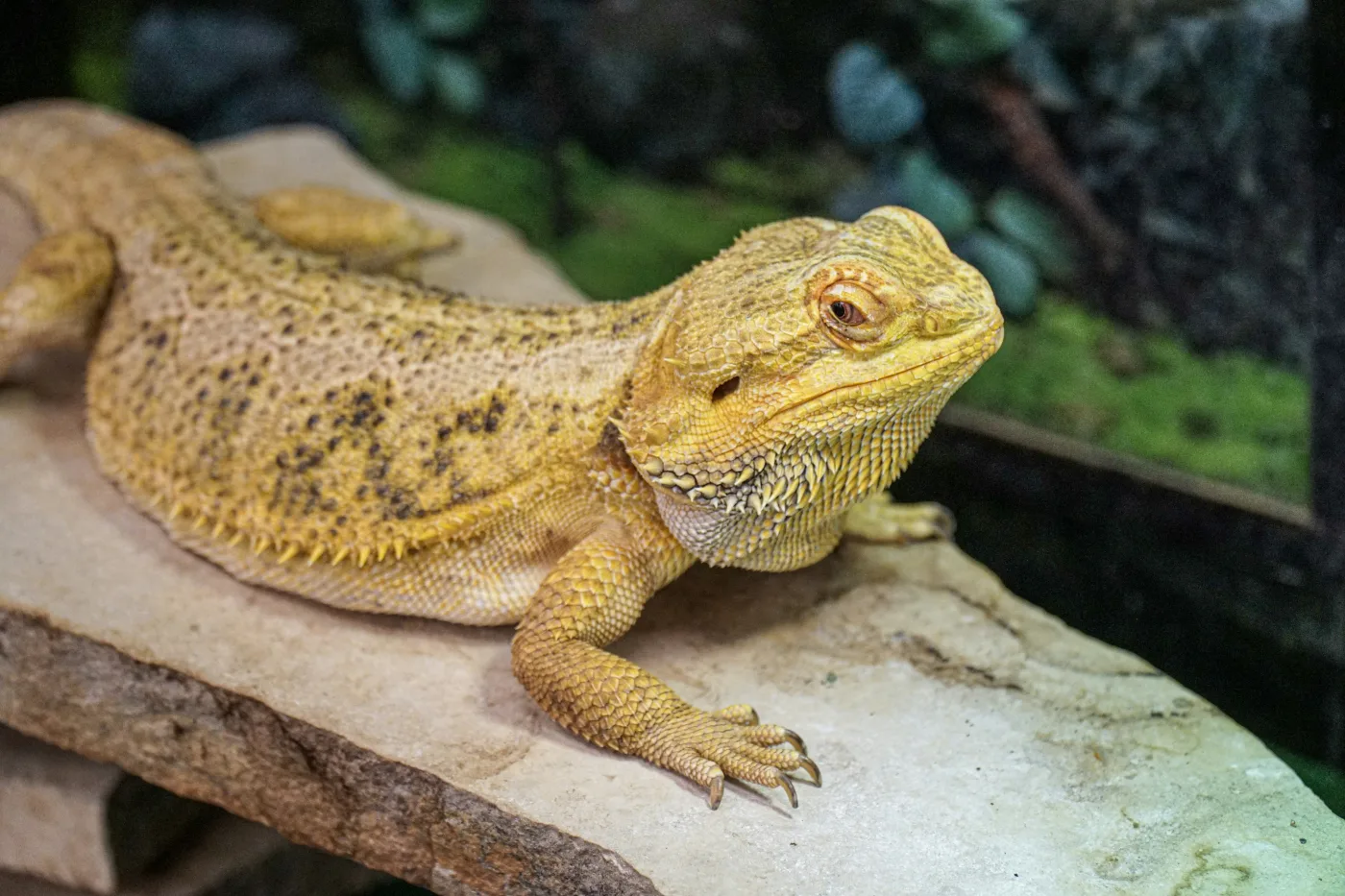
In This Article
- The lizard that’s disappearing from Texas roads
- Why reptile sperm science has been stuck in the 1980s
- How do you electro-ejaculate a horned lizard? (Carefully.)
- What 10 days in a fridge and liquid nitrogen can do
- What’s still broken — and what happens next
You’ve probably stepped on one. Or swerved. The Texas horned lizard — that flat, spiky, blood-squirting weirdo of the Southern plains — is in freefall. Once a common sight from Dallas to the Rio Grande, Phrynosoma cornutum is now so rare that Texas listed it as threatened in 1977. And the usual conservation playbook isn’t working. Captive breeding has been a slog — low hatch rates, unexplained infertility, and no real way to move genes between zoos without shipping the actual lizards. That’s expensive, stressful for the animals, and often fails. But a team from the Fort Worth Zoo just pulled off something that could change that: they collected, chilled, and froze viable sperm from wild horned lizards for the first time ever. Then they thawed it. Nearly 40% of the cells could still swim. For a field that’s been guessing in the dark for decades, that’s a floodlight.
The lizard that’s disappearing from Texas roads
These aren’t your average backyard anoles. Horned lizards eat almost nothing but harvester ants — a specialized diet that makes them hell to keep in captivity. Breeding programs have limped along for years, but nobody really knew why some males failed to fertilize. That’s because herpetologists have spent decades studying female reptile reproduction: ovulation, egg-binding, hormone shots. Male side? Almost nothing. “We’ve neglected half the equation,” the study’s lead author, Allison Julien, told me indirectly through her data. So the Fort Worth crew decided to fix that — starting with 20 wild males caught in June 2025 at the Matador Wildlife Management Area in Cottle County. That timing mattered: late June is the tail end of their breeding season. If the technique worked then, when sperm production is naturally winding down, it would work anytime.
Why reptile sperm science has been stuck in the 1980s
Here’s the ugly truth: most reptile sperm collection still happens post-mortem. You kill the animal, dissect the vas deferens, and scoop out whatever’s there. That’s useless for a threatened species. The live alternative? Manual massage — basically squeezing the lizard until something comes out. It works for snakes. For lizards, it’s a coin flip. A 2019 study on Mexican crevice swifts got semen from only about half the males. Electroejaculation has been around for turtles and crocs, but the probes were too big for small lizards. That changed around 2018, when researchers adapted a 2mm probe for medium-bodied species like the spiny lava lizard. But nobody had tried it on Phrynosoma. Until now. The risk was real: too much voltage could injure the cloaca; too little, no sample. The Fort Worth team started conservatively — 3 volts, five-second pulses — and found the sweet spot.
How do you electro-ejaculate a horned lizard? (Carefully.)
First, you sedate the lizard. Each male got an intramuscular injection of alfaxalone — 15–18 mg per kilogram, right into the left forelimb. (The muscle mass there is tiny, so some subcutaneous spread is inevitable. Still, it worked.) Then you wait. About 10 to 15 minutes for the lizard to go limp but still breathing. Heart rate checked with a portable ultrasound — the same Butterfly iQ probe humans use for bedside diagnostics. Then the probe: 2mm wide, lubricated, inserted just 12mm into the cloaca. That’s shallow — less than half an inch. Then the juice. Five to seven discharges, each lasting five seconds, with a five-second rest in between. Voltage started at 3.0 V and crept up to 5.0 V if nothing came out. After the cycle, gentle pressure on the abdomen, sweeping downward. And there it was: a tiny opalescent droplet at the cloacal opening. The team drew it up with a 20-microliter pipette — smaller than a mosquito’s leg — and diluted it immediately in INRA96, a commercial semen extender developed for stallions. Why horse juice for a lizard? Because it works. The milk proteins stabilize sperm membranes, and the antibiotics kill off any cloacal bacteria. One male produced 176 million sperm per milliliter. That’s Olympic-level for a reptile.
“This is the first report of semen storage and cryopreservation in Phrynosoma — a critical step for banking genetics before the species disappears from more of its range.”
— Julien et al., preprint · 2026What 10 days in a fridge and liquid nitrogen can do
Short-term: the team stored diluted semen at 4°C — basically a good refrigerator. Motility held steady for two full days. After 10 days? Still 19% of the sperm were moving. That’s a huge window. You could overnight a sample from El Paso to Dallas and still have viable cells for artificial insemination. Long-term: they froze samples in liquid nitrogen using a commercial media called INRA Freeze. Average post-thaw motility was only 13.9%. That sounds low until you realize that’s the first proof of concept. Five males beat 20%, and the champion retained 38.2% motility. Not great by mammal standards. For a lizard? It’s a proof of life. “We can now bank sperm,” the authors write. That’s a first. And because they used a slow-freezing method — equilibrate on ice, then vapor over liquid nitrogen, then plunge — the protocol is reproducible in any zoo with basic cryo gear. No expensive programmable freezers required.
What’s still broken — and what happens next
Let’s be honest: 13.9% average post-thaw motility isn’t a victory lap. Most of those sperm are dizzy, damaged, or dead. The cryoprotectant they used, INRA Freeze, lacks glycerol — because glycerol can act as a contraceptive in some species. Smart precaution, but the trade-off was low survival. The team plans to test other freezing formulas and maybe that caffeine trick. Also, all 20 lizards were wild. Can you repeat this on captive-bred animals with different stress loads? Unknown. And they haven’t actually performed artificial insemination yet — that’s the next mountain. But the door is open. For the first time, a Texas horned lizard’s genes can outlive the animal. That’s not just a lab curiosity. That’s a lifeline.
- 10-day shipping window — Refrigerated sperm stays motile long enough to cross the state, making artificial insemination practical between zoos without moving the animals.
- No more killing for science — Electroejaculation works on live, wild males. That’s an ethical and conservation game-changer for threatened reptiles.
- The freezer is now an option — Even 13.9% recovery means you can bank genetics indefinitely. That didn’t exist for this species 24 hours ago.
“The development of successful protocols would drastically expand horned lizard breeding strategies to include the transfer of semen from the wild or other institutions.” — Julien et al., preprint, 2026.
📄 Source & Citation
Primary Source: Julien AR, Griffioen JA, Perry SM, Doege R, Burger IJ, Barber D. (2026). Semen collection, short term storage, and cryopreservation in the Texas horned lizard (Phrynosoma cornutum). bioRxiv preprint. https://doi.org/10.1101/2026.04.03.716302
Authors & Affiliations: Allison R. Julien (Fort Worth Zoo), John A. Griffioen (Fort Worth Zoo), Sean M. Perry (Midwestern University), Robyn Doege (Fort Worth Zoo), Isabella J. Burger (UNC Chapel Hill), Diane Barber (Fort Worth Zoo)
Data & Code: Available via the journal’s supplementary materials upon publication; raw data can be requested from Fort Worth Zoo’s conservation department.
Key Themes: Assisted reproduction · Reptile cryopreservation · Electroejaculation · Texas horned lizard conservation · Sperm storage
Supporting References:
[1] Campbell L et al. (2020). A model protocol for the cryopreservation of motile lizard sperm using caffeine. Conservation Physiology, 8(1).
[2] Martínez-Torres M et al. (2019). Electroejaculation and semen evaluation of the viviparous lizard Sceloporus torquatus. Zoo Biology, 38:393-396.
[3] Perry SM & Mitchell MA (2021). Reptile assisted reproductive technologies: can ART help conserve 300 million years of evolution? Reproduction, Fertility and Development, 34:385-400.
No comments yet. Be the first to share your thoughts.
Leave a Comment