 Sanjay Verma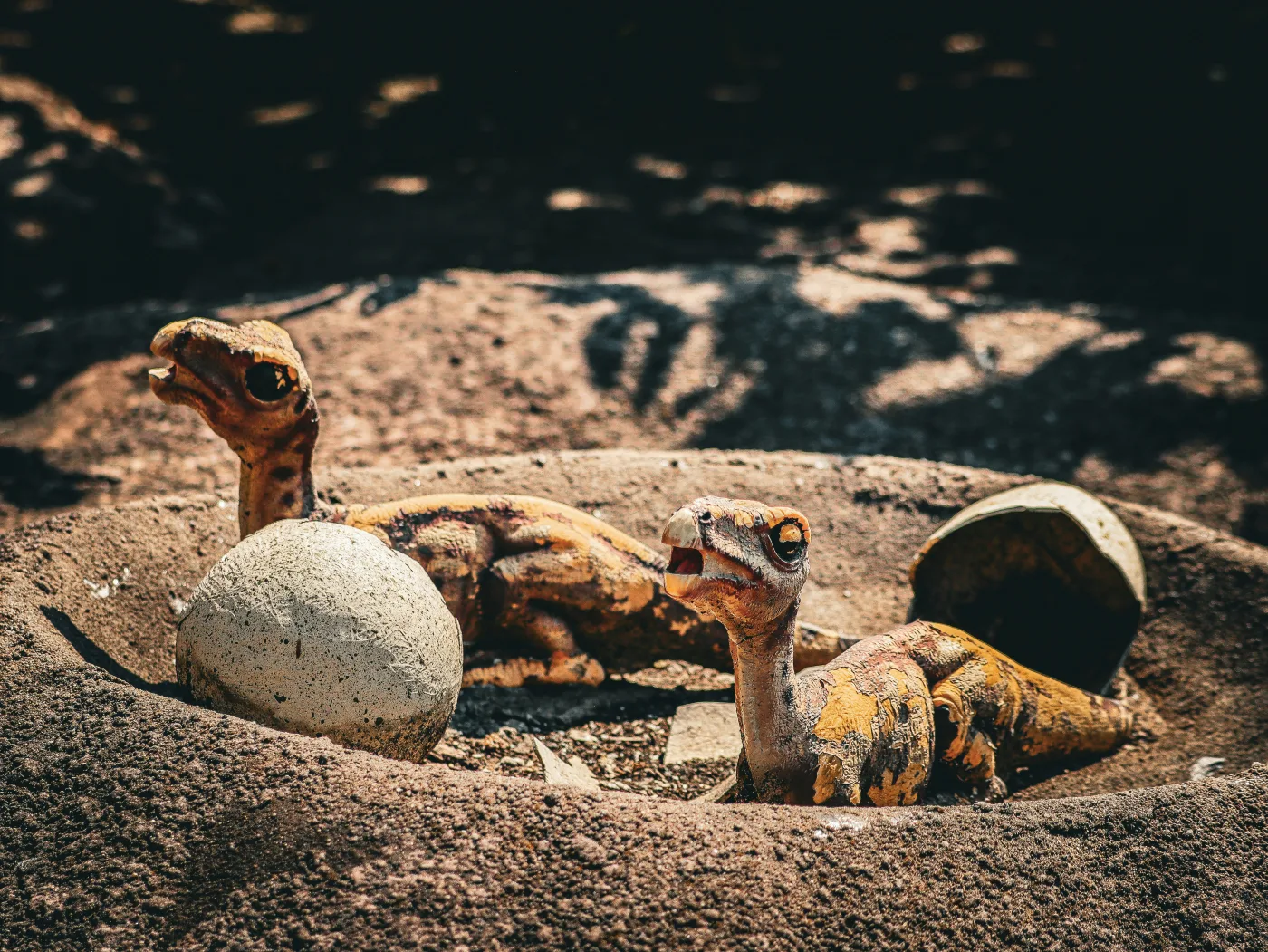
In This Article
- What Tiny Teeth Tell Us About Baby Dinosaur Meals
- Why Maiasaura Keeps Surprising Us
- How Did Dinosaur Parents Choose Their Babies' Food?
- What This Changes About Dinosaur Family Life
- What Scientists Want to Check Next
Picture a huge duck-billed dinosaur picking out soft fruit for its babies, while chewing on tough stems itself. New fossils from Montana show this is exactly what dinosaur parents may have done 75 million years ago. The clue was hiding in something tiny: baby teeth. People used to think only birds and mammals fed their young this way. Now it looks like dinosaurs did it too, long before any bird took to the sky.
What Tiny Teeth Tell Us About Baby Dinosaur Meals
A team at Ohio State University took a close look at the teeth of a plant-eating dinosaur called Maiasaura peeblesorum. These dinosaurs lived in big herds and built their nests close together on the ground. Their teeth tell a clear story. Tough plants leave one kind of mark on enamel. Soft food, like sweet fruit, leaves a different kind. When the team checked baby teeth and adult teeth side by side, the marks looked very different. The babies had soft-food marks. The adults had tough-plant marks.
Why Maiasaura Keeps Surprising Us
Few dinosaurs have changed the way people think about prehistoric family life like this one. Scientists have found nests, eggs, baby bones, and full-grown bones from the same place. That makes Maiasaura the go-to dinosaur for studying dinosaur parents. What is new this time is the detail. These were not just adults standing guard near a nest. They seemed to know, in some way, that growing babies need different food than grown-ups. The easiest way to explain the tooth marks is that parents picked the soft food for their kids and kept the hard, stringy plants for themselves.
How Did Dinosaur Parents Choose Their Babies' Food?
The short answer is hidden in the wear pattern on every tooth. Baby Maiasaura teeth show soft-food wear, just like the marks fruit leaves on modern animal teeth. Adult teeth from the same species show heavy shearing from chewing leaves and stems. The simplest answer is that grown-ups picked the soft food and brought it back to the nest. There is one more idea worth thinking about. Parents may have chewed up the plants first, or even thrown some up to feed their babies. That sounds gross, but lots of birds do it today. Either way, the babies ended up with food that was soft and easy to eat.
"The urge for a bird to feed a youngster is a very old behavior. What we're providing is evidence that it probably goes much further than the origin of birds, perhaps to the origin of dinosaurs."
— John Hunter, Ohio State University · Palaeogeography, Palaeoclimatology, Palaeoecology, 2026What This Changes About Dinosaur Family Life
This finding pushes kind, caring parent behavior way back in time. People already knew Maiasaura lived in big groups. But picking out food for your kids is a whole new level of caring. It means a parent could tell what a baby needed, and went and got it. The answer surprised even the scientists who did the work. They thought the diet would be about size, not about choice. A study of their bones shows baby Maiasaura grew really fast in their first year. To grow that fast, a baby needs lots of good food. Soft, fresh fruit would be perfect. In a world full of bigger, hungrier dinosaurs, growing up fast was the best way to stay alive.
What Scientists Want to Check Next
The team's next step is to look at the very smallest teeth, from eggs and from just-hatched babies. Those might show what a baby dinosaur ate in its very first days. A lot of questions are still open. Did both the mom and the dad bring food? When did young dinosaurs start eating tough plants like the grown-ups? Could other dinosaurs have done the same thing if scientists looked at the right teeth? If a duck-billed dinosaur was bringing fruit to its babies before flowers had even taken over the planet, what other small acts of love are still hiding inside old teeth and broken eggshells?
- Tooth marks tell the story — Tiny scratches on baby teeth showed soft food, while adult teeth showed tough plants from the same place and time.
- Parents picked the menu — Adult Maiasaura likely carried soft fruit back to nestlings, mirroring how modern bird parents feed their chicks.
- Caring parents are ancient — Bird-like parental feeding may go back to the very origin of dinosaurs, far earlier than anyone had proof of.
"Even among closely related dinosaurs, there is probably still quite a bit to learn about them." — John Hunter, Palaeogeography, Palaeoclimatology, Palaeoecology, 2026.
📄 Source & Citation
Primary Source: Hunter, J. P. et al. (2026). Dental microwear evidence of differential diet between juvenile and adult Maiasaura peeblesorum. Palaeogeography, Palaeoclimatology, Palaeoecology. https://doi.org/10.1016/j.palaeo.2026.S0031018226001707
Authors & Affiliations: John P. Hunter, Department of Evolution, Ecology, and Organismal Biology, Ohio State University, and colleagues.
Data & Code: Tooth microwear scans and specimen catalog numbers available in the supplementary materials of the published paper at ScienceDirect.
Key Themes: Dinosaur Parenting · Dental Microwear · Maiasaura · Hadrosaur Behavior · Cretaceous Montana
Supporting References:
[1] Horner, J. R. & Makela, R. (1979). Nest of juveniles provides evidence of family structure among dinosaurs. Nature, 282:296–298.
[2] Woodward, H. N., Freedman Fowler, E. A., Farlow, J. O. & Horner, J. R. (2015). Maiasaura, a model organism for extinct vertebrate population biology. Proceedings of the Royal Society B, 282(1797):20140987.
[3] Erickson, G. M. et al. (2017). Wear biomechanics in the slicing dentition of the giant horned dinosaur Triceratops. Science Advances, 3(6):e1602476.
No comments yet. Be the first to share your thoughts.
Leave a Comment