

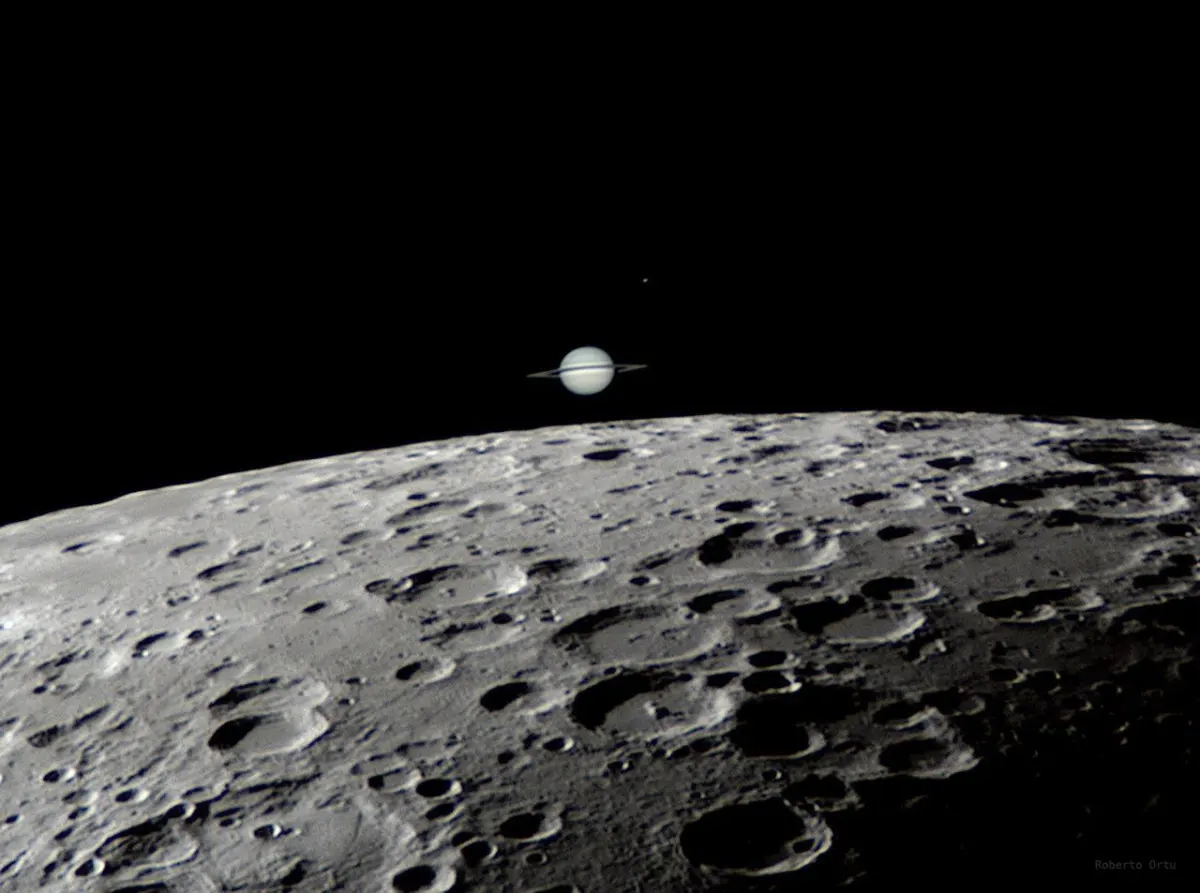
Sometimes, Saturn seems to vanish from the sky. On 10 November 2026, NASA's Astronomy Picture of the Day showed exactly that moment. In the photo, titled “Saturn Behind the Moon,” the ringed planet hangs just above the curved edge of the Moon, about to disappear behind it.
The picture was taken after sunset in Sardinia, Italy, by photographer Roberto Ortu. It captures an event called a lunar occultation, when the Moon passes in front of a planet or star and hides it.
Saturn does not really go anywhere, of course. The Moon simply gets in the way, the same way a friend standing in front of you can block your view of a stage.
This occultation took place on 4 January 2025. It could only be seen along a narrow strip of Earth, from Greenland through central Europe and into northern Africa. Sardinia was right in its path.
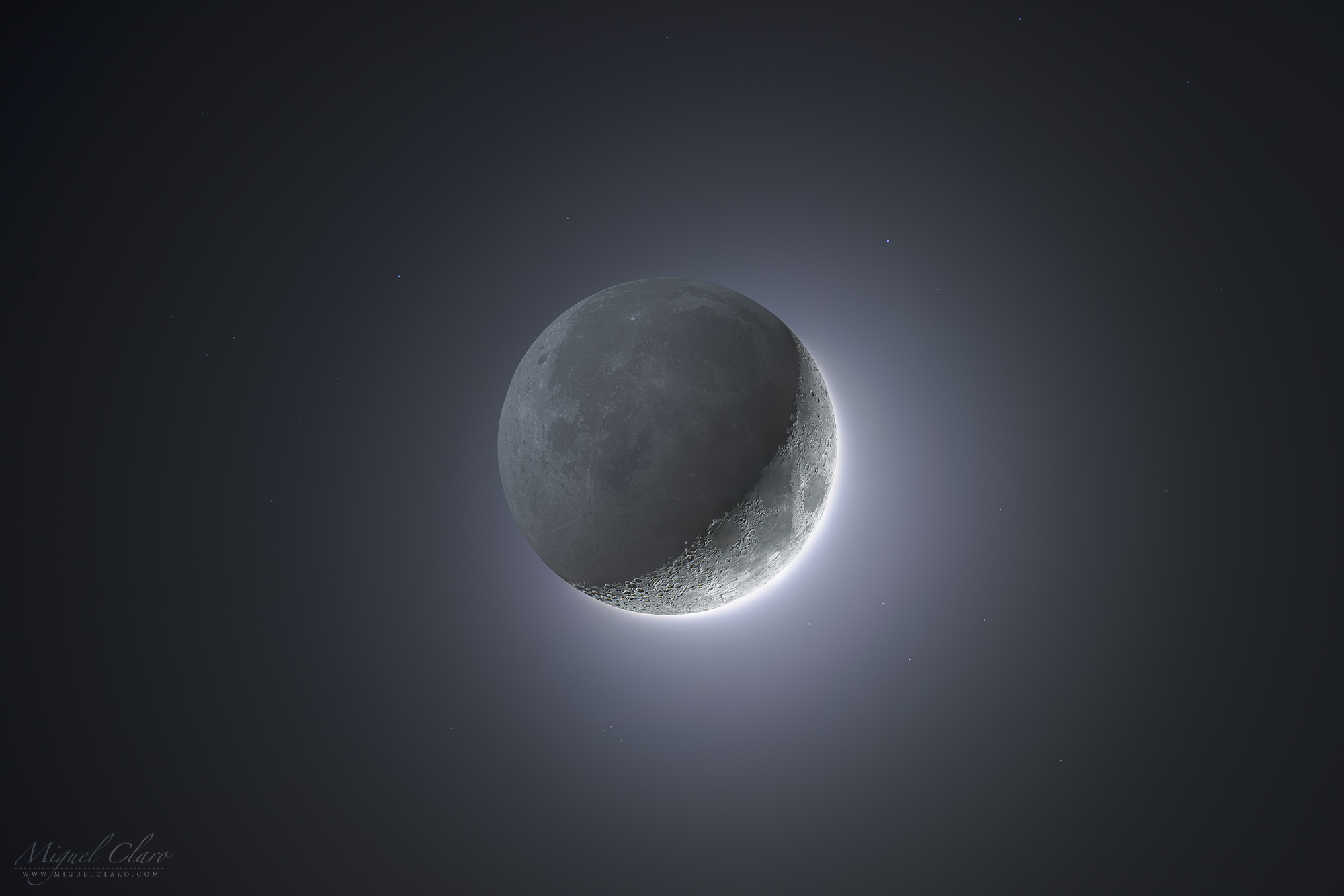
That evening, the Moon was a thin crescent, with only about a quarter of it lit by the Sun. The rest of the Moon glowed faintly with earthshine, sunlight that bounces off Earth and onto the Moon's dark side.
Saturn slipped behind it at around 17:24 Universal Time, in the early evening for most of Europe. Many skywatchers across Europe photographed the planet as it blinked out.
A picture made of three
The final image is not a single snapshot. It is a blend of three photos. One shows Saturn alone, taken just before it disappeared. The other two show the Moon, each taken with a different amount of light.
Why go to all that trouble? The Moon is far brighter than Saturn.
A camera setting that shows faint Saturn would turn the Moon into a glaring white blob. A setting that shows the Moon clearly would make Saturn too dim to see. Blending the photos lets both look right, a bit like the HDR mode on many phone cameras.
The photo also holds a small surprise. Near Saturn there is a bright dot that looks like one of its moons. It is actually a star called 85 Aquarii. That star lies so far away that it is farther behind Saturn than Saturn is behind the Moon.
Why Saturn seems to vanish
The trick works because of distance. The Moon is about 384,000 km from Earth. Saturn is more than a billion kilometres away, thousands of times farther. So even though Saturn is huge, the nearby Moon can easily cover it.
You can try this yourself. Hold your thumb out at arm's length and close one eye. Your small thumb can hide a whole building far away. The Moon does the same thing to Saturn.
These events are rare because everything must line up just right. The Moon, Saturn and the place where you stand on Earth all have to fall on one straight line. That is why only a narrow strip of the planet gets to see each one.
Saturn itself is the sixth planet from the Sun and the second biggest after Jupiter. It is famous for its bright rings, which are made of countless pieces of ice and rock. You can learn more on NASA's Saturn page and its Moon page.
Saturn was also getting ready for a show of its own. In March 2025, its rings turned edge-on to Earth, which made them almost disappear from view for a while. That happens only about every 15 years.
When you can see it next
There was one more chance soon after. On 1 February 2025, the Moon covered Saturn again, but only for viewers in the far north, including parts of Russia.
If you missed this one, you will need some patience. According to NASA's picture page, the next time the Moon covers Saturn, as seen from somewhere on Earth, will be in 2031.
The Moon does cover other planets and bright stars from time to time. Astronomy websites and apps list these events in advance, along with the places on Earth where each one can be seen.
Until then, Saturn is easy to spot on its own. It looks like a steady, yellowish star, and even a small telescope can show its rings. Next time you see it, remember that the Moon can make it vanish, at least for a little while.
📄 Source & Citation
Primary source: Nemiroff, R., Bonnell, J., Chirenti, C., & Rockcliffe, K. (eds.) (2026). Saturn Behind the Moon. NASA Astronomy Picture of the Day, 10 November 2026. Image credit & copyright: Roberto Ortu. https://science.nasa.gov/image-article/apod-2026-november-10-saturn-behind-the-moon/
Original reporting: NASA Astronomy Picture of the Day, via NASA Science.
Comments
No comments yet. Be the first to share your thoughts.
Leave a comment