

Imagine living on the Moon or Mars, going about your day much as you do on Earth. On future NASA missions, part of that daily life could include picking fresh food grown just a few steps away. To make it possible, NASA researchers are working out which crops can keep astronauts fed far from home.
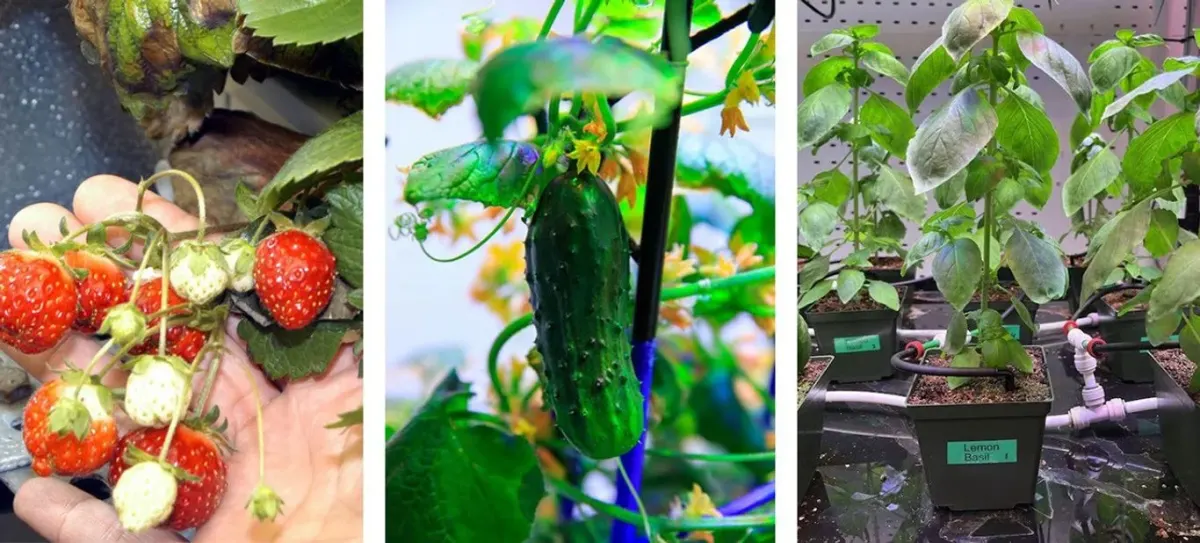
In a 25 November update, NASA said recent tests point to three promising space crops: strawberries, cucumbers and lemon basil.
Fresh food is only part of the story. According to NASA, space crops can also absorb carbon dioxide, produce oxygen and recycle water. Those abilities become more valuable the farther crews travel from Earth, where resupply missions are slow or impossible.
Strawberries: a sweet choice with a space problem
Few sweet fruits are on NASA’s list for spaceflight. Strawberries made it because they are nutritious, smell appealing and can pollinate themselves, which matters in a sealed habitat with no bees.
At NASA’s Kennedy Space Center in Florida, researchers grow strawberries in growth chambers that mimic conditions on a spacecraft. Partners at the Australian Research Council Centre of Excellence in Plants for Space are adding to what scientists know about space strawberries.
Researchers from NASA Kennedy, the University of Melbourne and the University of Western Australia recently compared a wild strawberry with ‘Delizz’, NASA’s leading strawberry candidate. Both grew under simulated space conditions. Their results appeared in September in the journal Life Sciences in Space Research.
The two plants gave very different fruit. Delizz produced large red berries. The wild strawberry produced small yellow ones, the result of a recessive genetic mutation.
Appearance was not the whole story, though. When grown from seed, the wild strawberry produced twice as many buds, flowers and fruits as Delizz.
Even so, Delizz kept its place at the top. The wild plant sent out too many runners, the long stems strawberries use to spread. On a spacecraft, every bit of growing space counts, and a plant that sprawls is a problem.
Cucumbers: a first for the gourd family?
Astronauts have grown many crops in space, but never one from the gourd family, which includes cucumbers, melons and squash. Cucumbers could change that.
First, they have to pass careful testing on the ground. NASA-funded researchers studied how cucumbers grow, how much they yield and how nutritious they are under spaceflight conditions. The plants showed some signs of enlarged leaves, but they kept producing edible fruit. The study was published in August in the journal HortScience.
A wider choice of crops does more than improve meals. NASA says variety supports astronauts’ mental well-being and adds plant biodiversity, which raises the chance that crops will succeed on long missions. If one crop fails, others can take its place.
Lemon basil: flavour for bland meals
Eating the same packaged meals day after day can wear astronauts down, a problem known as menu fatigue. Fresh herbs can help by giving familiar food a new taste.
That is where lemon basil comes in. This edible herb has a citrus smell and flavour, and it has cleared its first round of space crop testing at NASA Kennedy. Its seeds have also passed sanitization, a cleaning step that removes microorganisms before any seeds can fly.
Next, researchers will test how well lemon basil grows in “plant pillows”, small seed-and-soil packs used to grow plants aboard the International Space Station.
A new crop chamber heads to space
The work on Earth is preparing for tests in orbit. A new investigation from NASA’s Biological and Physical Sciences Division is set to send a prototype crop growth chamber to the space station. NASA says the results will help shape crop production systems for future Moon bases and Mars missions.
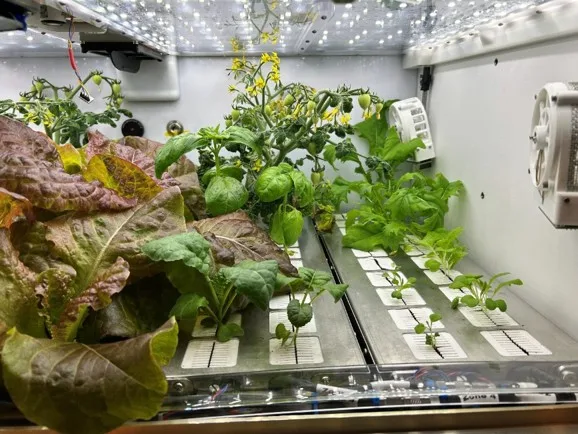
That system, called Ohalo III, is designed as a demonstration of the first operational crop production system in space. It will test how to deliver water to plants in microgravity and how to make the best use of limited growing space.
For now, the menu is still being written. But strawberries, cucumbers and lemon basil show what future astronauts might one day pick, slice and season on another world.
📄 Source & Citation
Source & Citation: NASA Science — NASA Eyes Crop Candidates for Future Menus (25 November 2026) · NASA Science — Ohalo III: Validating the First Operational Crop Production System in Space (18 November 2026)
Comments
No comments yet. Be the first to share your thoughts.
Leave a comment