

Proxima Centauri is the closest star to our Sun. It is also home to a confirmed planet, Proxima b. Two more planets remain candidates. Now, a new study has challenged another idea about this nearby star. Researchers found no clear evidence of the three dust belts reported earlier.
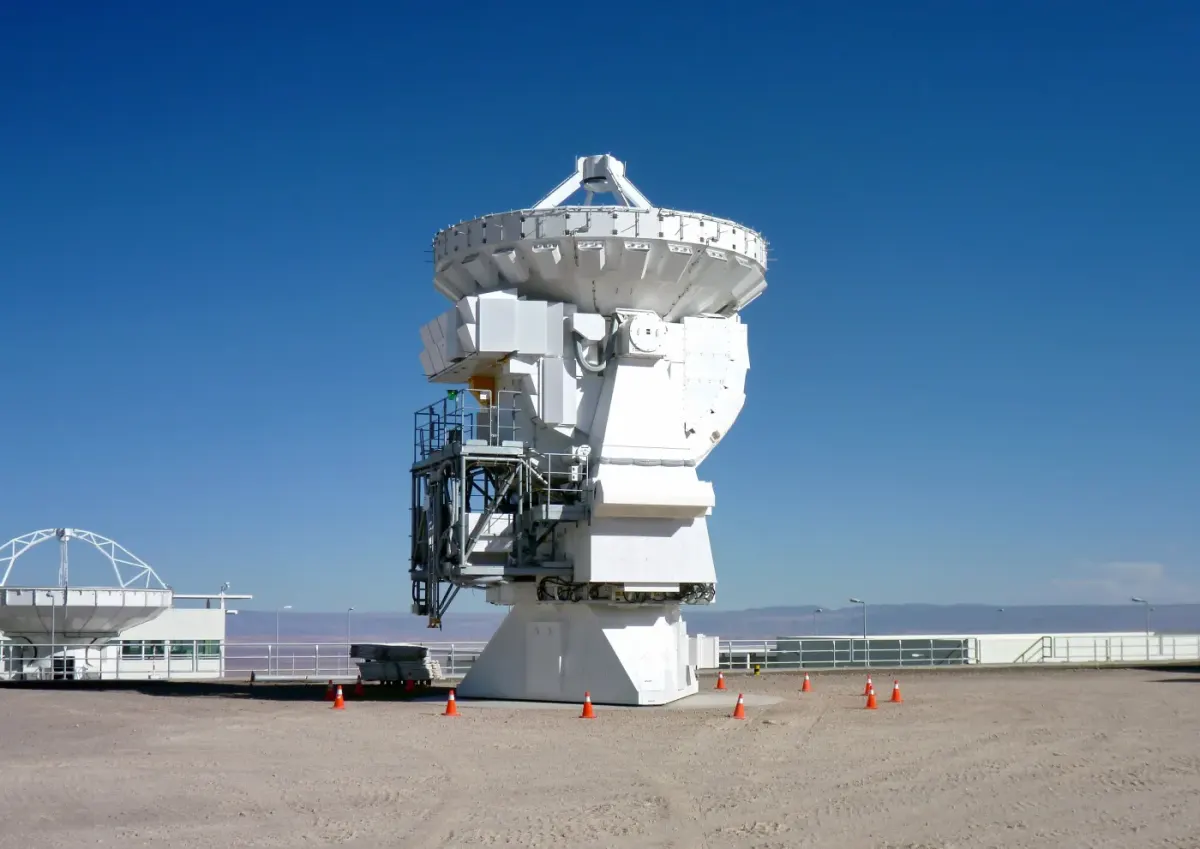
The team studied Proxima Centauri with the Atacama Large Millimeter/submillimeter Array (ALMA). Their observations were more sensitive than the earlier data. They also checked images from different years. The results point to a surprising problem: some supposed disk features may belong to objects far behind the star.
A search for three possible dust belts
In 2017, researchers reported three possible dust belts around Proxima Centauri. They used ALMA and its Atacama Compact Array (ACA). Their results suggested a cold belt between 1 and 4 astronomical units (au). They also proposed warm dust within 0.4 au. A third, very cold belt appeared near 30 au.
That outer belt was especially interesting. Researchers estimated it could contain about 0.33 Earth masses of material. If real, it would make the system look more like our own Solar System.
But the earlier results had a problem. A later study found that a powerful stellar flare had made Proxima's millimetre brightness rise almost 1,000 times in one minute. This explained much of the excess light in the earlier ACA data. It also weakened the case for the inner dust components.
The outer belt remained uncertain. So the researchers returned to the data.
What the new ALMA observations revealed
The team studied ACA observations from 2019 and 2023. These were about 2.5 times more sensitive than the 2017 observations. They also examined high-resolution data from ALMA's 12-metre array, collected in 2021.
The observations used a wavelength of about 1.3 millimetres. The researchers compared images from different years. They also aligned images to account for Proxima's movement across the sky.
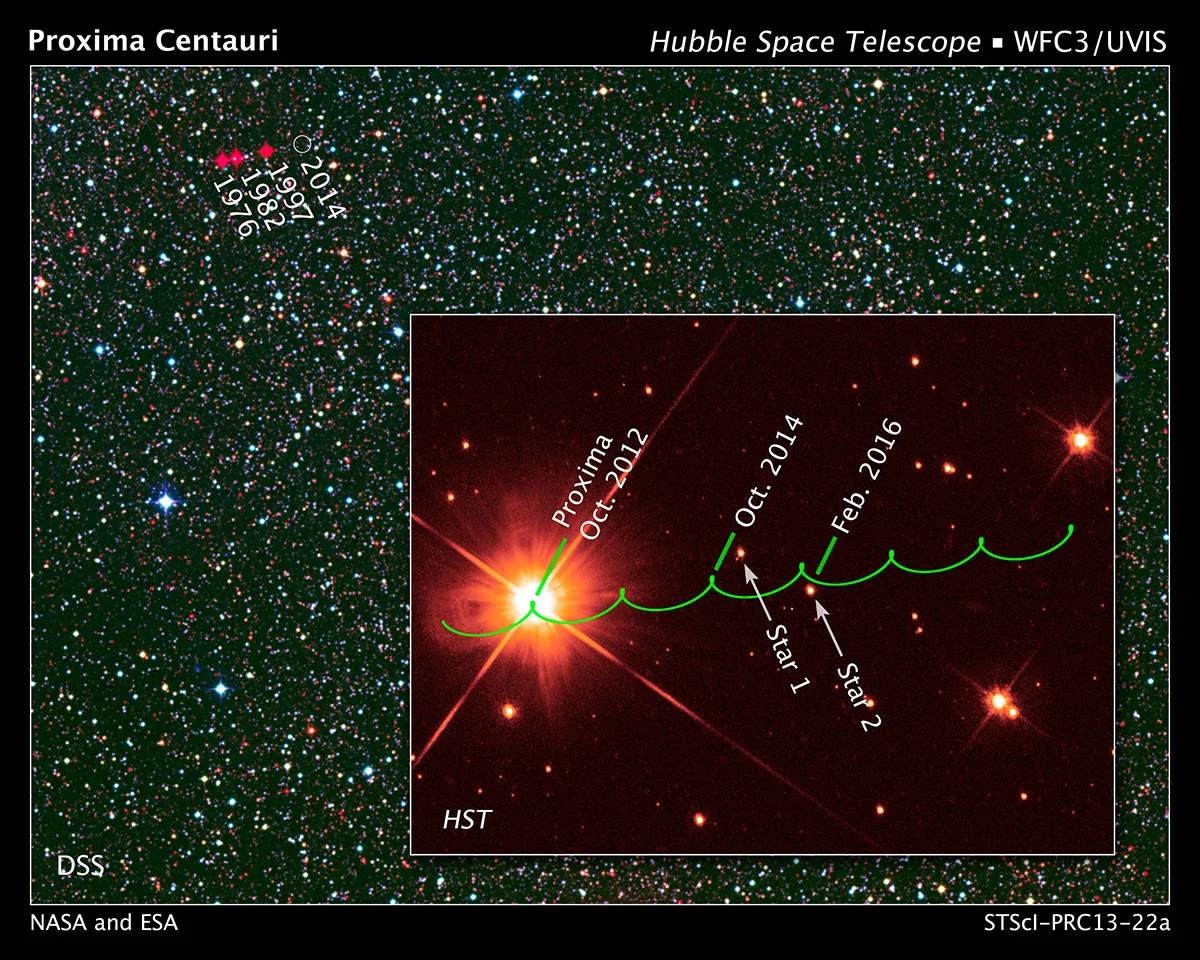
This movement became an important clue. A real disk should move with its star. Background objects should stay in place.
Several bright features east of Proxima did not follow the star's motion. Some changed position between observing periods. Others were outside the image by 2023. The team therefore considered them more likely to be background objects.
The researchers also found a bright, extended background region north and west of the star. It partly overlapped with Proxima in the 2023 images. Separate carbon monoxide observations from 2021 revealed gas features linked to Galactic cirrus. This is faint material spread through our own galaxy.
The team then combined ALMA data with older observations from Hubble, Gaia, 2MASS, Spitzer and ALLWISE. They identified 24 background sources and studied their light across different wavelengths. Their models suggested that these stars would not be bright enough for ALMA to detect at 1.3 millimetres. The sources alone could not explain the observed features.
How much dust could still be hiding?
The researchers found no statistically significant evidence of dust belts. But this does not prove that no dust exists. Faint material could still remain below the telescope's detection limit.
For the proposed belt near 30 au, the team calculated an upper dust-mass limit. It is below 1.5 × 10²³ grams. That is less than 0.002 times the mass of Earth's Moon.
The study also found excess light from the star at 1.3 millimetres. The measured central emission was higher than the predicted stellar brightness. The researchers estimated this excess at about 41 microjanskys.
But its source remains unknown. Warm dust could produce it. Activity in the star's outer atmosphere could also explain it. The current observations cannot separate these possibilities.
For a possible warm dust component, the team set an upper mass limit of about 2 × 10²¹ grams. This is roughly 100 times the estimated dust mass in our Solar System's zodiacal belt.
Future ALMA observations could help solve the mystery. The researchers point to two useful options: Band 7, where dust emission should be stronger, and Band 3, where stellar activity should stand out more.
Proxima Centauri also moves quickly against the background sky. In future observations, it may appear close to bright background objects. That could make the star harder to study.
For now, the three proposed dust belts remain unconfirmed. The nearby star still holds an open question: is faint dust hiding there, or is the remaining signal coming from the star itself?
📄 Source & Citation
Source & Citation: Jay S. Chittidi et al. (2026), The Astrophysical Journal Letters, 1009:L14 — Disk or No Disk? Revisiting the Proxima Centauri System with Deep ALMA Observations
Comments
No comments yet. Be the first to share your thoughts.
Leave a comment