

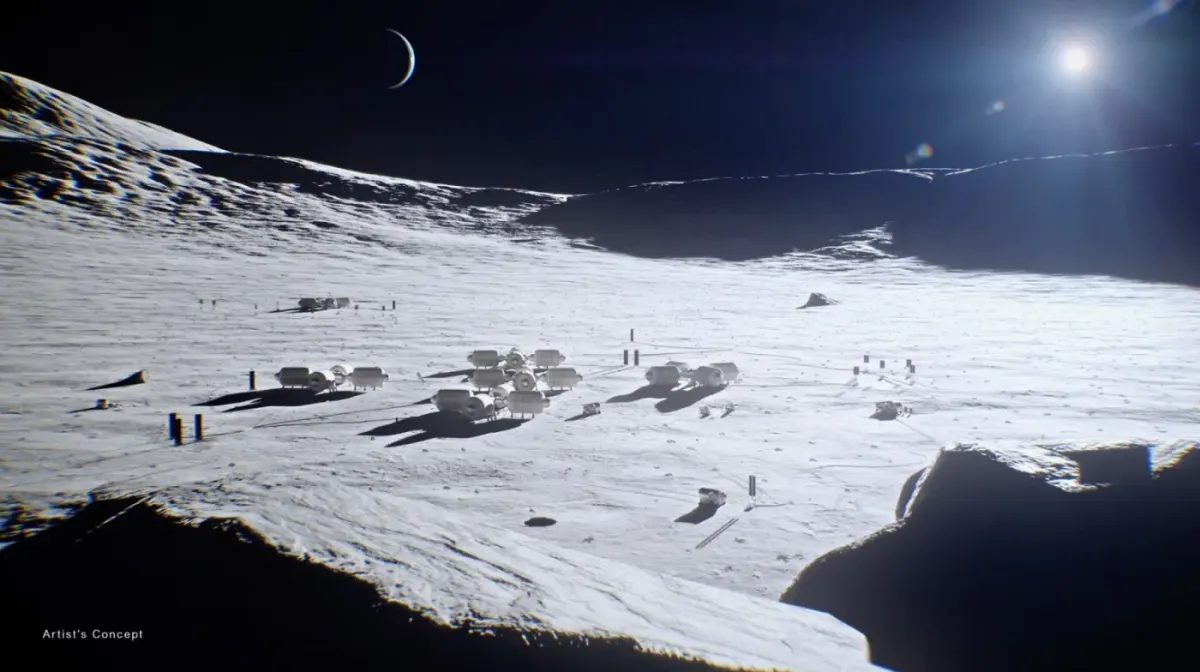
Imagine waking up on the Moon.
You open your eyes. Outside your window, the ground is covered in grey dust. Strange mountains rise in the distance. The sky is completely black, even where sunlight touches the land.
And there, hanging in the darkness, is Earth.
It looks like a beautiful blue world. Somewhere on that distant planet, people are going about their day. But you are here, hundreds of thousands of kilometres away, living on another world.
For now, this is only an imagined morning. But NASA wants to bring parts of this picture to life.
The agency is working towards building a Moon Base near the lunar South Pole. It could become a place where astronauts live, work and explore for much longer than a short visit.
And the most interesting part? NASA does not plan to build it in one day. The first steps are already being planned, with robots, landers and new machines preparing the way.
A place unlike anywhere on Earth
Why choose the Moon's South Pole?
Look closely at this region. It is filled with ancient craters, steep slopes and deep shadows. Some places receive sunlight for long periods. Other areas remain dark for a very long time.
That darkness matters.
Scientists believe some of these shadowed craters may hold frozen water. Think about what that could mean for astronauts living there. Water could become more than something to drink. With the right equipment, it might also help provide oxygen and fuel.
Sunlight could help provide another essential resource: electricity.
But finding the right location will not be easy. NASA must study the ground, lighting, safe landing areas and routes between important locations. A beautiful view alone cannot make a safe home.
The South Pole offers great opportunities. It also presents some of the Moon's toughest challenges.
Building a home, one mission at a time
Imagine arriving at the Moon Base years from now. Your home would not appear by magic. Before astronauts can stay there, machines must do much of the early work.
NASA has divided its plan into three phases.
First comes learning (2026–2029).
Robotic missions will explore the South Pole. They will test equipment, study the surface and help find suitable places for future operations.
Think of them as the first visitors preparing a place for people who will arrive later.
Then comes building (2029–2032).
NASA and its partners plan to bring important systems to the Moon. These include power, communications, transportation and supplies.
Without these, a lunar home would be little more than a shelter in a very difficult place.
Finally comes living and working (2032 onward).
NASA plans to bring habitats and other essential systems together. These could support astronauts staying on the Moon for extended periods.
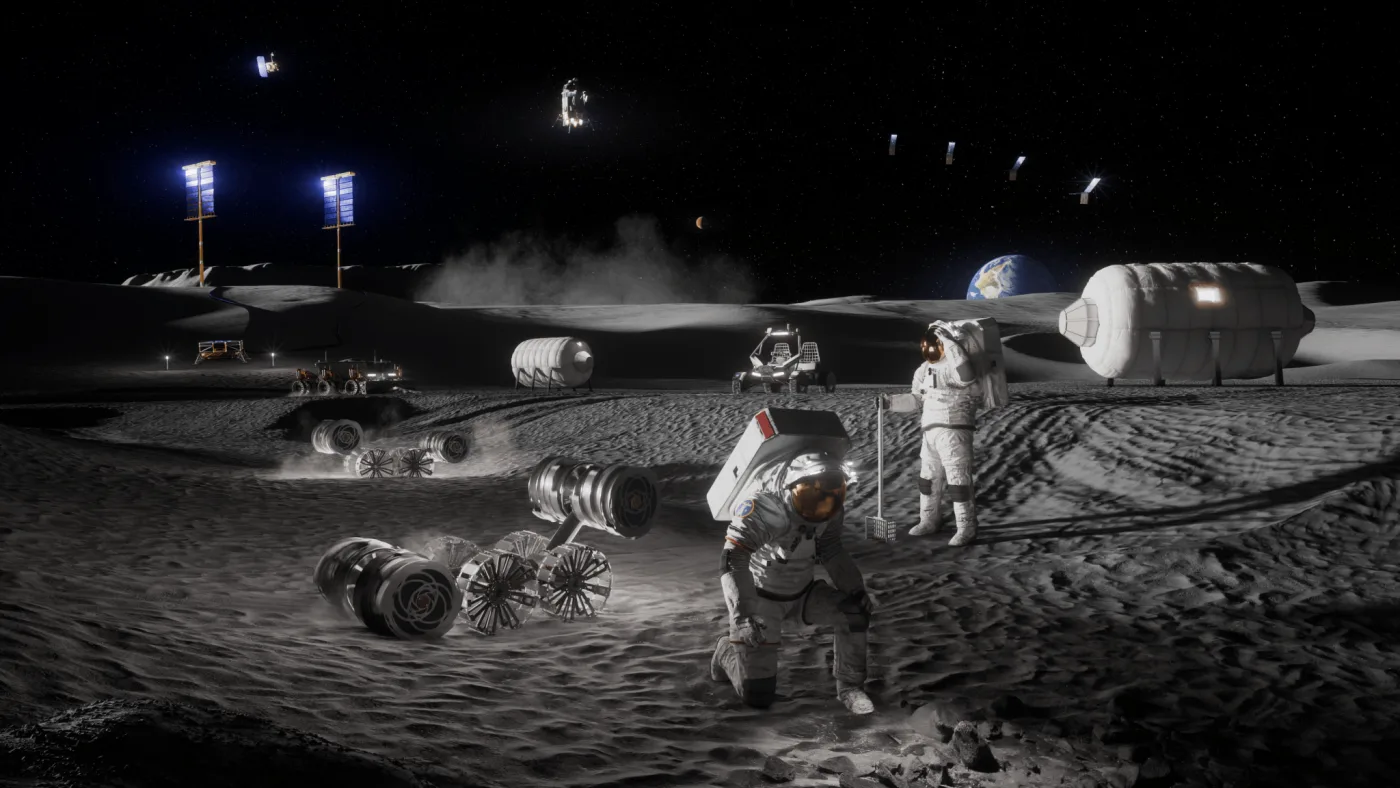
This is the bigger dream: not simply landing, taking photographs and returning home, but learning how to live and work on another world.
These dates are NASA's development targets, not guaranteed completion dates.
The Moon will not make life easy
Here is something to think about.
On Earth, we can step outside for fresh air. We can drink water from a tap. If the weather changes, we can find shelter.
On the Moon, every one of those simple things becomes a challenge.
There is no breathable air outside. Astronauts will need spacesuits to survive. Their homes must protect them from the harsh surroundings.
Then there is the temperature. Sunlit and shadowed areas can be extremely different. The ground is rough, and tiny pieces of lunar dust can damage equipment.
Even travelling a short distance could require careful planning.
NASA is working on rovers, landers and other machines to help astronauts move around. Some robotic missions will also study possible water resources and difficult areas.
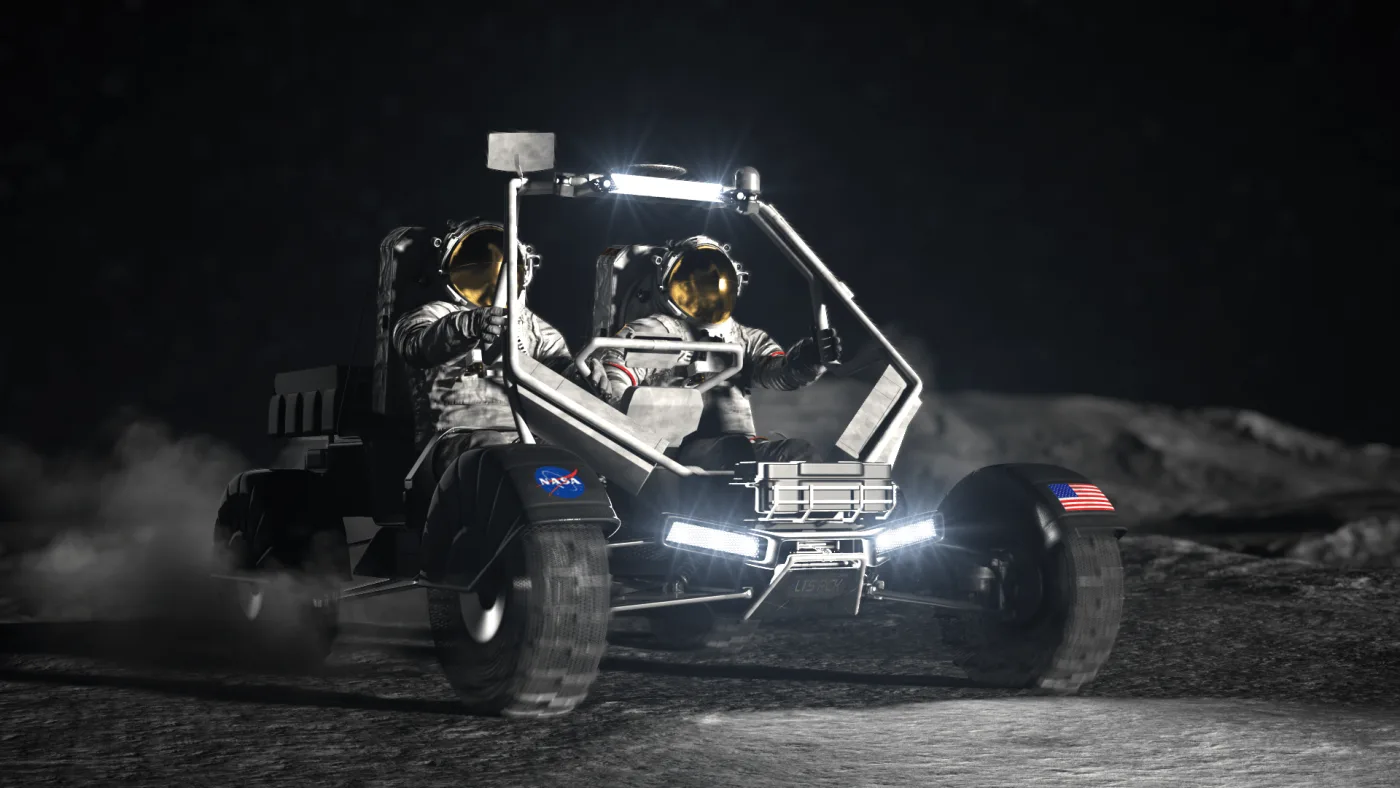
Every machine must work in a place where help from Earth is far away.
The first step towards a bigger dream
Why go through all this trouble?
Because the Moon could teach us how to explore places much farther away.
NASA hopes that the knowledge gained from the Moon Base will help prepare humans for future journeys to Mars. Engineers can test power systems, habitats, vehicles and ways to support astronauts during long stays.
And perhaps the most beautiful part is what this future could mean for us back home.
For generations, people have looked at the Moon from their windows, rooftops and open fields. We have watched it change shape and brighten the night.
One day, someone may look back at Earth from a window on the Moon.
At NavsoraTimes, we find that thought especially moving. The world we see above us today could become the world someone calls home tomorrow.
The Moon is still a distant place. But step by step, we are learning how to get closer.
📄 Source & Citation
Primary source: NASA, What Is the Moon Base? (NASA Knows, November 18, 2026).
More from NASA: NASA Moon Base
Comments
No comments yet. Be the first to share your thoughts.
Leave a comment