

Look towards the nearest stars. One of them has a remarkable family.
It is called Proxima Centauri. This small star lies just over four light-years from Earth. It is our closest stellar neighbour. Yet its story reaches far beyond its own light.
Proxima is part of a three-star system. It has a planet of its own, too. And its frequent flares raise questions about that world's atmosphere.
A nearby star that is hard to see
Proxima Centauri lies in the constellation Centaurus. It is close to us by cosmic standards. But you cannot see it with your naked eyes.
The reason is simple. Proxima is a faint star. Its average brightness is very low. It also has only about one-eighth of the Sun's mass.
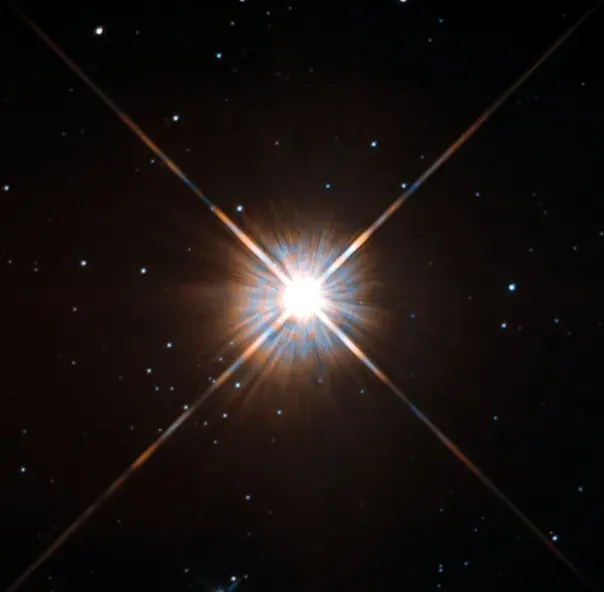
NASA's Hubble Space Telescope has captured a view of this nearby star. The image shows Proxima as a bright point. Its two stellar companions are outside the frame.
Hubble used its Wide Field and Planetary Camera 2. Even with this powerful telescope, Proxima remains point-like. That gives us a sense of the vast distances between stars.
A star that sometimes erupts
Proxima Centauri is not always calm. Sometimes, its brightness rises suddenly. Astronomers call it a flare star.
Processes inside the star can trigger these changes. They produce sudden bursts of starlight. Proxima is also a red dwarf.
There is another striking detail about its life. NASA says astronomers expect Proxima to remain a main-sequence star for another four trillion years.
The main sequence is the long stage of a star's life. Our Sun is in this stage, too. Proxima's small size helps explain its long expected lifetime.
Three stars sharing one system
Here is where the story becomes even more interesting.
Proxima Centauri is not an isolated star. It belongs to the Alpha Centauri system. The other two stars are Alpha Centauri A and Alpha Centauri B.
The International Astronomical Union also gives them names. Alpha Centauri A is Rigil Kentaurus. Alpha Centauri B is Toliman.
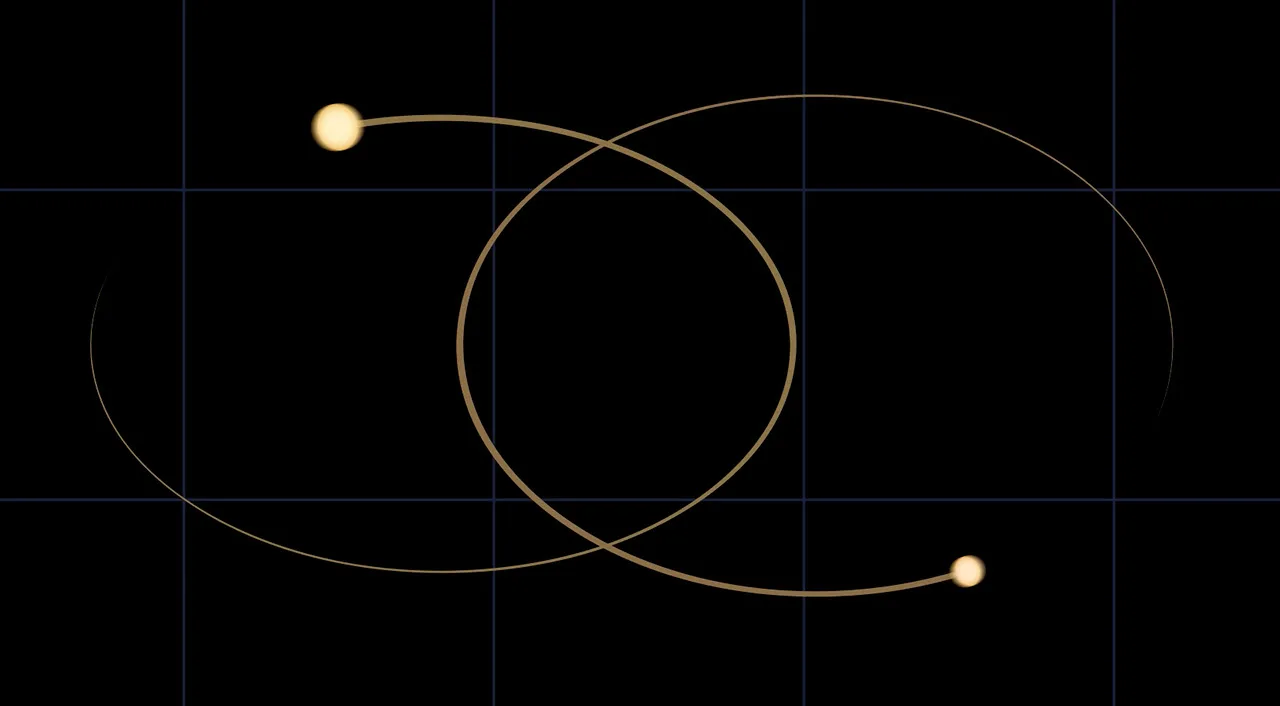
The two stars orbit each other. One complete orbit takes about 80 years. Proxima follows a much wider path around them.
That journey takes more than half a million years. So the three stars share one system. But their paths are very different.
Together, they are known as Alpha Centauri.
Meet Proxima b, the nearby planet
Proxima Centauri has at least one known planet. It is called Proxima b. NASA's explainer also notes that two more planets may exist.
Proxima b is a super-Earth. It is likely rocky, like our own planet. But it is more massive than Earth.
NASA gives its mass as about 1.27 Earths. The planet orbits very close to its star. One year there lasts just 11 Earth days.
Yet Proxima b lies in the habitable zone. This is the region around a star where liquid water might exist on a planet's surface.
Why is that possible so close to the star? Proxima Centauri is smaller and cooler than the Sun. Its habitable zone is therefore much closer in.
But there is an important catch. Being in this zone does not prove a planet can support life.
Could Proxima b keep its atmosphere?
Liquid water needs the right conditions. A suitable atmosphere is one important part.
NASA's explainer, last updated in June 2025, said scientists could not then determine whether Proxima b had an atmosphere. The star's flares add another concern.
Proxima Centauri often releases intense ultraviolet radiation. These bursts might strip away a planet's atmosphere over time.
That possibility matters. Without a suitable atmosphere, Proxima b may struggle to keep conditions that allow liquid water.
So its place in the habitable zone is only one part of the story. Its atmosphere remains a key question.
A small star system with a big story
Proxima Centauri is our closest stellar neighbour. But its surroundings are far from simple.
Three stars follow different paths. A nearby planet circles one of them. And powerful flares may shape that planet's environment.
For astronomers, Alpha Centauri offers a nearby place to study stars and planets together. For the rest of us, it offers a remarkable reminder.
The closest star beyond our Sun is not just a tiny point of light. It belongs to a system full of questions.
📄 Source & Citation
Source & Citation: NASA — Proxima Centauri (Hubble image and description) and Our Nearest Celestial Neighbor? An Exotic 3-Star System.
Comments
No comments yet. Be the first to share your thoughts.
Leave a comment