

Look up at the quiet night sky.
Many tiny points of light are stars. But they are not alone. They belong to something much bigger.
Our home galaxy: the Milky Way.
Now imagine crossing it from one side to the other. Even at the speed of light, the trip would take about 100,000 years.
That is how wide our galactic home is.
And here is something even harder to picture. The Milky Way is only one of billions of galaxies in the universe we can observe.
So, what exactly is a galaxy? And where do we fit inside one?
What is a galaxy?
A galaxy is a huge family of stars, gas and dust. It also contains dark matter. Gravity holds all these things together.
Some galaxies contain just a few thousand stars. Others hold trillions.
They also come in different shapes. Some look like giant pinwheels. Others look like smooth, glowing balls. A few have no clear shape at all.
Astronomers place them into broad groups.
Spiral galaxies have a flat disk and curved arms. Our Milky Way belongs to this family. Its arms contain gas, dust and many young stars.
Elliptical galaxies look round or oval. They often hold older stars. They also tend to have less gas and dust for making new stars.
Irregular galaxies have no neat shape. Some look stretched or uneven. Close encounters with other galaxies can change their forms.
There is also a special group called lenticular galaxies. They have a disk and central bulge, but no clear spiral arms.
You can explore these galaxy shapes in NASA's guide to galaxies.
How wide is our Milky Way?
The Milky Way is about 100,000 light-years across.
But what is a light-year?
It is not a measure of time. It measures distance. One light-year is how far light travels in one year.
Light moves at about 300,000 kilometres every second. In one year, it covers about 9.5 trillion kilometres.
At that speed, light would need about 100,000 years to cross our galaxy.
Our galaxy also contains an estimated 100 billion to 400 billion stars. The Sun is just one of them.
Many stars have their own planets. Some may have whole families of worlds. Our own solar system is one small part of this vast collection.
NASA explains this scale in its Milky Way size guide.
But where are we inside this enormous galaxy?
Our solar system sits in a smaller spiral feature called the Orion Spur. We are about halfway between the centre and the outer edge.
From Earth, we see the Milky Way as a pale band across dark skies. That glow comes from countless distant stars. We are looking through the flat disk of our galaxy from inside it.

A journey around the galactic centre
The Milky Way is not standing still. It spins, and our Sun moves with it.
Our solar system takes about 240 million years to complete one trip around the galactic centre.
Think about that for a moment. The last time the Sun was in this part of its path, dinosaurs had not yet appeared on Earth.
The galaxy's centre also holds a giant black hole. It is called Sagittarius A*. Its mass is about four million times the mass of our Sun.
But this black hole does not hold the whole galaxy together by itself. Gravity from all the galaxy's matter plays a role.
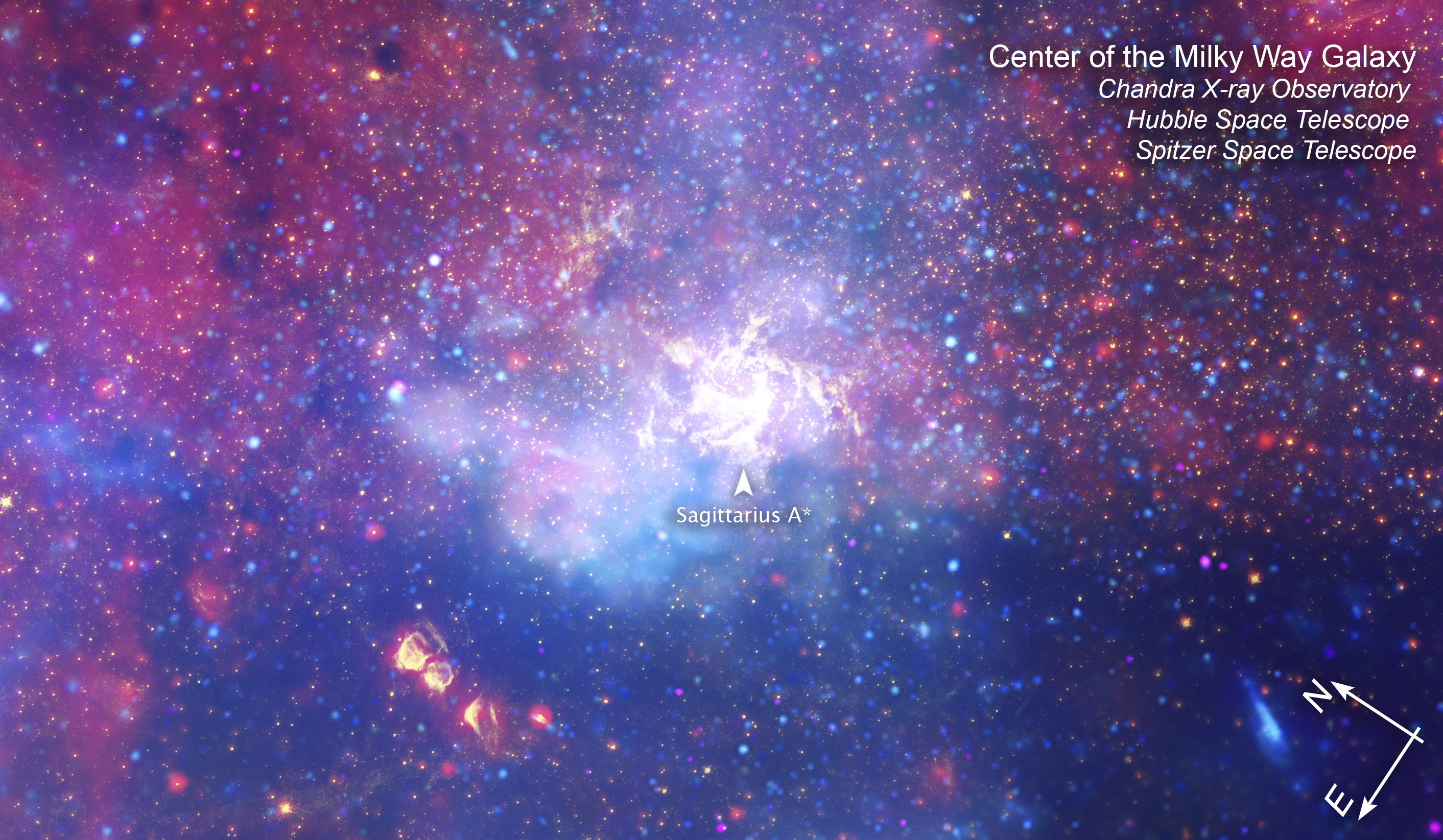
Much of that matter is dark matter. We cannot see dark matter directly. Yet its gravity affects how stars and galaxies move.
Read more about black holes and their powerful jets.
Our galaxy has neighbours too
The Milky Way is not alone.
It belongs to a group called the Local Group. This neighbourhood contains more than 50 galaxies.
Some are small. Others are large, like the Andromeda Galaxy. Andromeda is one of our nearest large galactic neighbours.
These galaxies are part of an even bigger picture. Groups and clusters gather into larger patterns across space. Together, they help form the universe's vast cosmic web.
And the light from distant galaxies takes time to reach us. When we look far into space, we also look back in time.
A galaxy millions of light-years away appears as it was millions of years ago. Its light began travelling long before it reached our eyes.
At NavsoraTimes, this is one of the most beautiful things about looking up. The sky is not just a view of space. It is also a window into the past.
The next time you see that faint, milky band above you, remember what it holds. Billions of stars, countless worlds and a story far older than human life.
And all of it is our galactic home.
📄 Source & Citation
Primary source: NASA Science. Galaxies.
Additional NASA reference: How Big Is Our Galaxy, the Milky Way?
Comments
No comments yet. Be the first to share your thoughts.
Leave a comment