

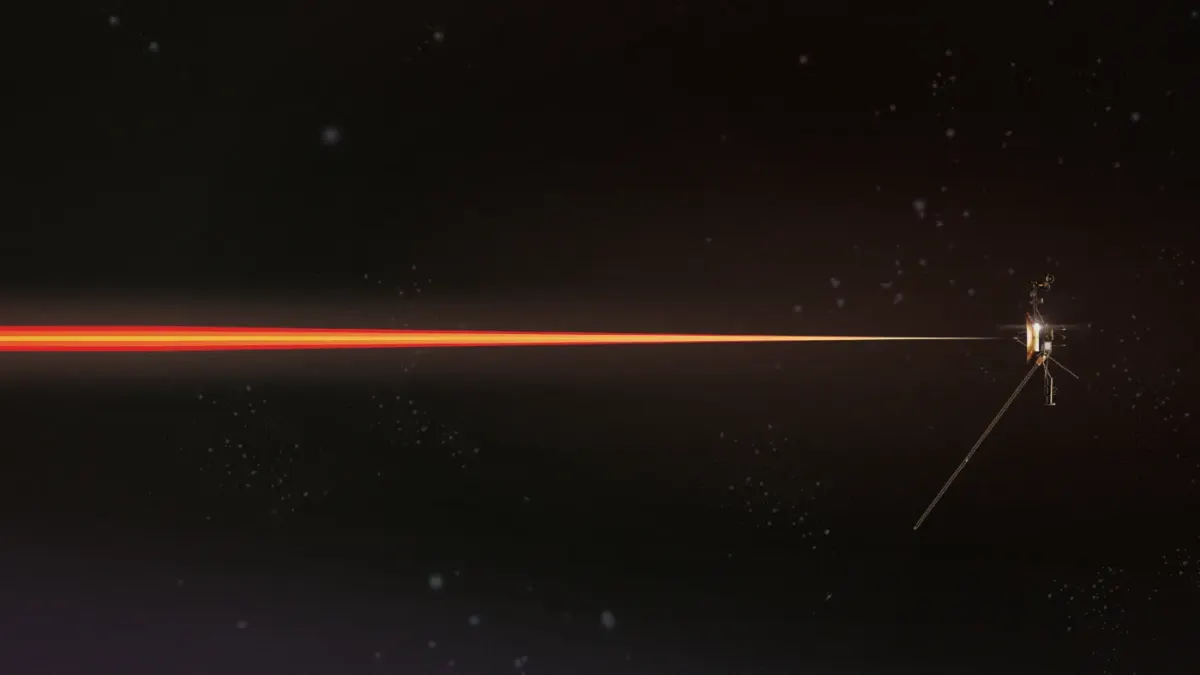
A signal travels for an entire day
NASA’s Voyager 1 has reached one light-day from Earth. The spacecraft crossed this distance on November 18, 2026, at 2:16 a.m. Pacific Standard Time.
It is now about 16.1 billion miles away. That is roughly 25.9 billion kilometres.
A light-day is the distance light travels in 24 hours. It is not the time Voyager 1 has spent travelling. The spacecraft needed more than 49 years to reach this milestone.
The distance creates a remarkable communication delay. A radio signal from Voyager 1 now takes about 24 hours to reach Earth. A command sent from Earth also takes about a day to reach the spacecraft.
This means a simple exchange can take around two days. Engineers must wait for a reply before knowing whether a command worked.
NASA confirmed the milestone after receiving the spacecraft’s signal. The achievement makes Voyager 1 the first human-made object to reach one light-day from Earth.
But the milestone comes during a difficult period for the mission. Voyager 1 recently stopped sending science and engineering data. Its carrier signal is still reaching Earth, and engineers are investigating the problem.
The journey beyond the Solar System
Voyager 1 launched on September 5, 1977. NASA sent it on a journey to study the outer planets.
It flew past Jupiter in 1979 and Saturn in 1980. Its observations revealed details about these planets and their moons. They also helped scientists understand the distant regions of our Solar System.
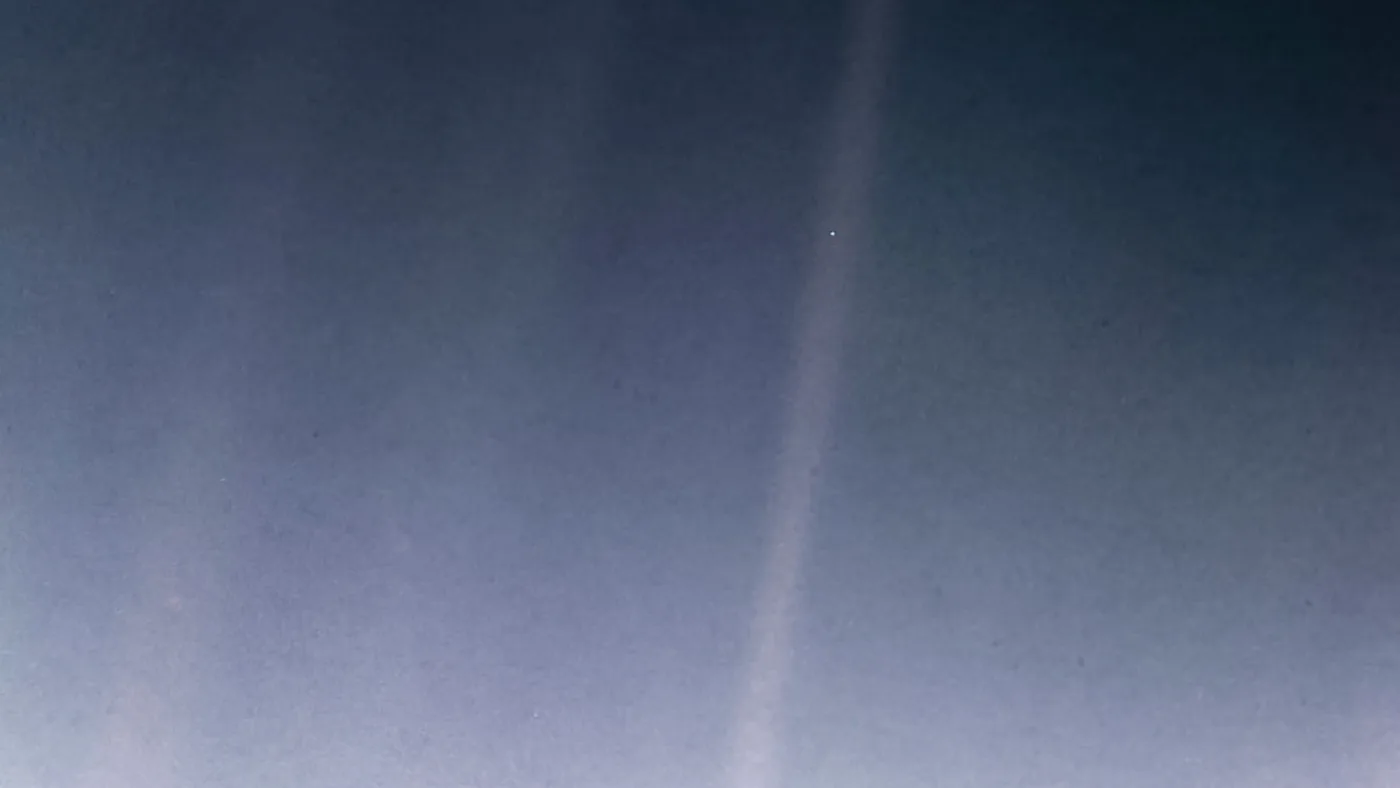
In 2012, Voyager 1 became the first spacecraft to enter interstellar space.
Interstellar space is the region beyond the heliosphere. The heliosphere is a vast bubble created by the Sun’s particles and magnetic field. It helps shield the Solar System from some cosmic radiation.
Voyager 2 followed a different route. It crossed into interstellar space in 2018, after visiting Uranus and Neptune.
Both spacecraft continue to study conditions far beyond the planets. Their instruments measure magnetic fields and particles in space. These measurements help scientists understand how the Sun influences its surroundings.
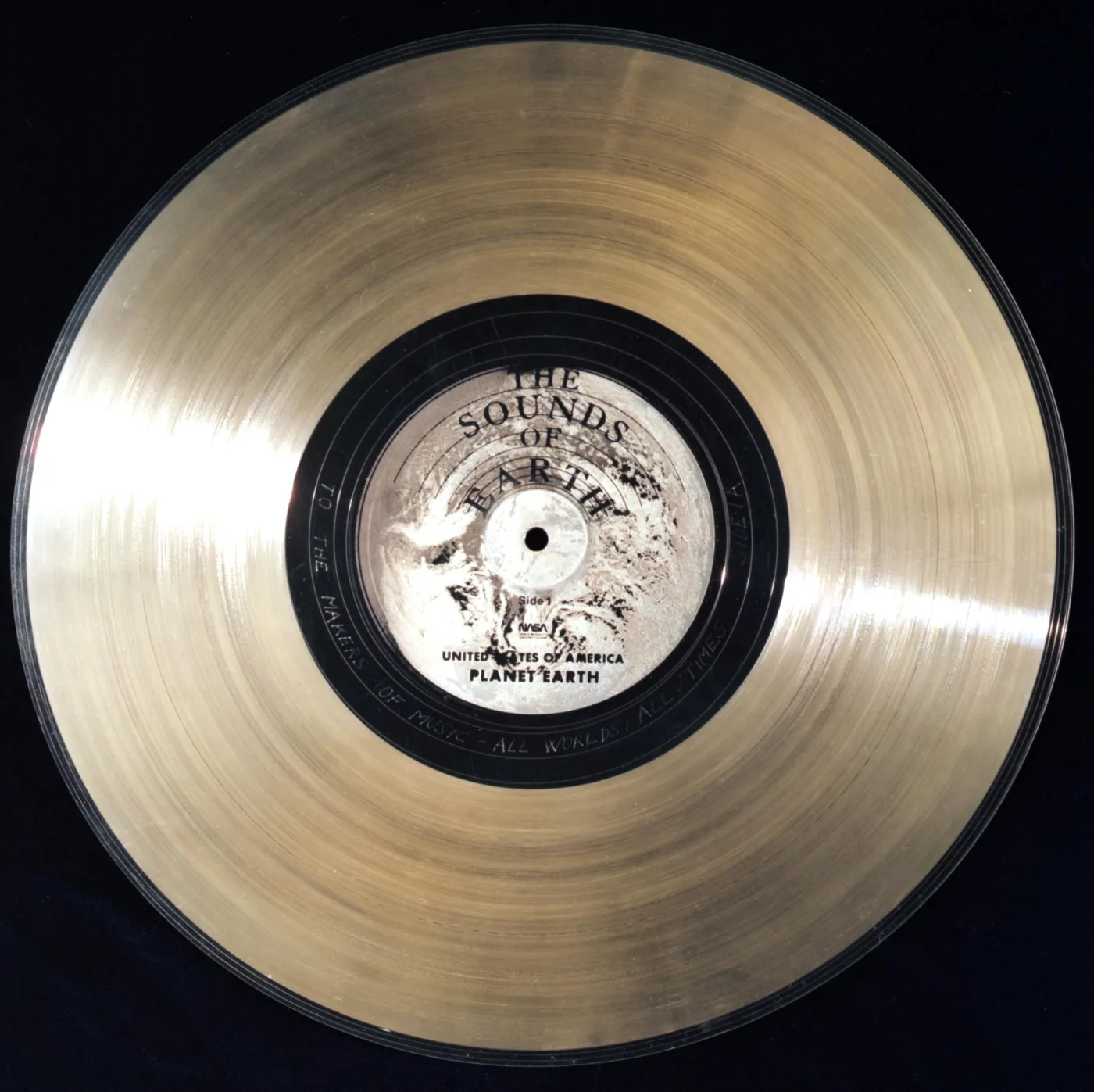
The spacecraft also carry a Golden Record. This gold-plated copper disc contains sounds and images from Earth. It was designed as a message for any advanced civilisation that might someday find it.
A historic spacecraft facing new challenges
Voyager 1 has survived for far longer than its original planetary mission. But its age brings serious engineering challenges.
NASA reported that the spacecraft stopped returning science and engineering data on November 14. Engineers still detected its carrier signal. This signal indicates that its antenna and radio system remain active.
The team suspects a problem with the onboard computer that collects data from the instruments. Engineers are investigating the cause and possible solutions.
The distance makes repairs especially difficult. Every instruction and response takes about a day to travel between Earth and the spacecraft.
Power is another concern. Voyager 1 uses a radioisotope power system. It converts heat from decaying plutonium into electricity.
The spacecraft loses about four watts of electrical power each year. Engineers have switched off equipment and introduced lower-power alternatives to extend its working life.
NASA expects recent power-saving measures to help the remaining science instruments operate until at least the mission’s 50th launch anniversary next summer. That anniversary will come in 2027.
The team continues to monitor both spacecraft. Their observations are valuable because no other operating probes are exploring interstellar space in the same way.
Voyager 1 has now travelled farther than any other human-made spacecraft. Its one-light-day milestone shows how far human exploration can reach. And even as engineers work through new problems, its journey continues into the space between the stars.
📄 Source & Citation
Source & Citation: NASA — NASA’s Voyager 1 Makes History Reaching One Light-Day From Earth (November 19, 2026)
Also: NASA Voyager blog — Voyager 1 Engineers Analyze Data Issue, Ready to Confirm Light-Day · NASA — Where Are Voyager 1 and Voyager 2 Now? · NASA JPL — One light-day milestone
Comments
No comments yet. Be the first to share your thoughts.
Leave a comment