

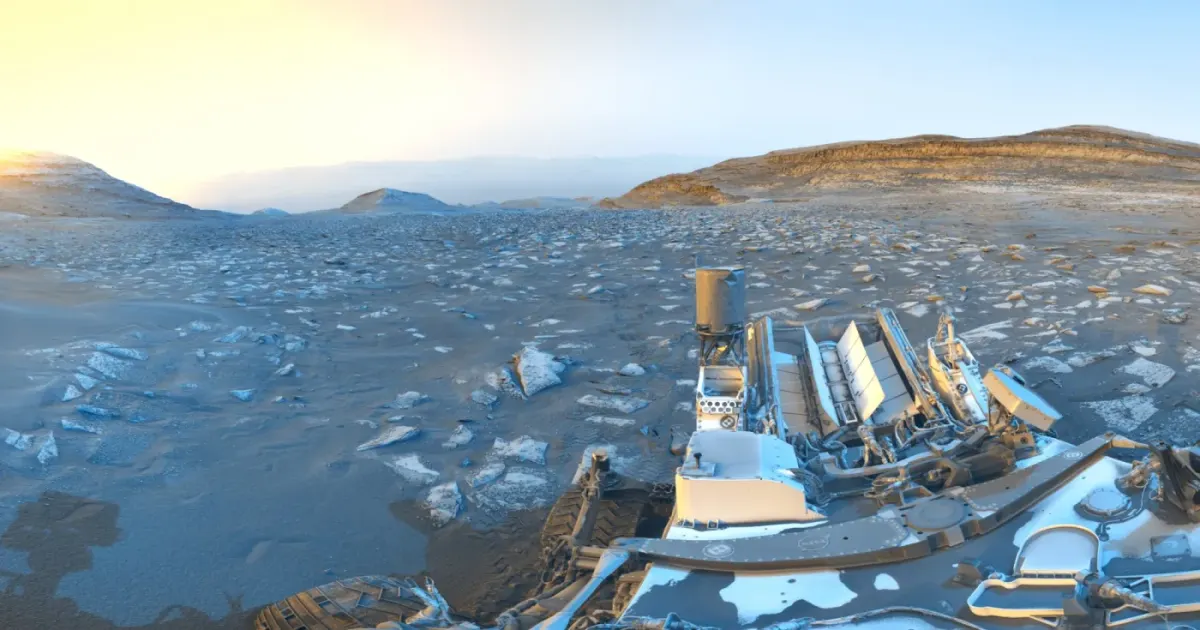
A little movement in the Martian sky
NASA’s Curiosity rover is still working on Mars. On November 20, 2026, NASA shared a new image from the rover. It shows delicate clouds drifting across the Martian twilight sky.
Curiosity captured the scene on October 31. It was the mission’s 5,061st Martian day, called a sol. The rover used its navigation cameras to record the clouds after sunset.
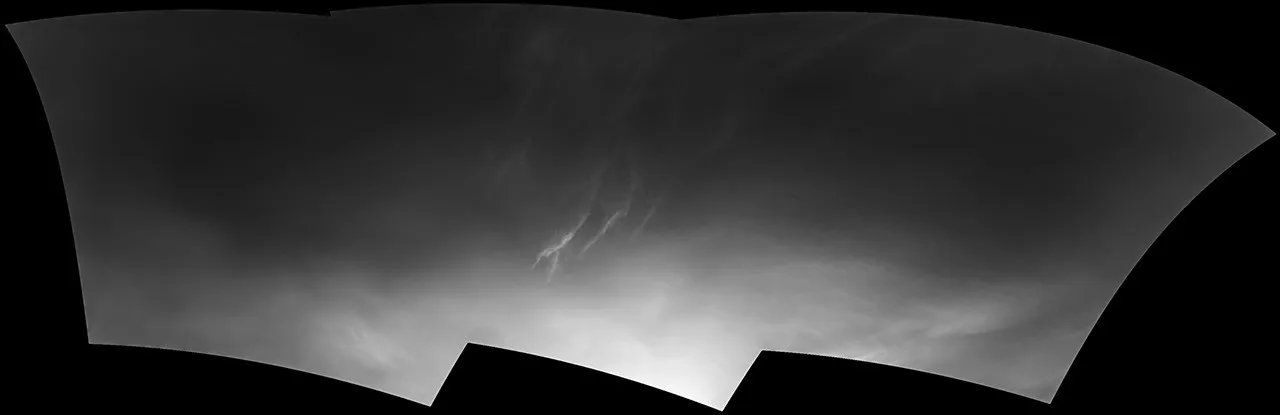
NASA calls them twilight clouds. They appear for a short time each fall over Gale Crater. Curiosity has been exploring this region for more than 14 years.
There is something special about this picture. A machine sent from Earth in 2011 is still watching another planet’s sky. Its cameras continue sending those views across space.
But the clouds are only part of the story. Curiosity has also been busy studying rocks.
What Curiosity is studying now
In November, the rover completed several weeks of drilling and analysis. It studied two rock samples named “Basque Lakes” and “Nazca.”
Its drill sits at the end of a robotic arm. It makes small holes in rocks and collects the powder inside. The rover then sends this material to instruments inside its body.
NASA published a collage on November 16. It shows 49 drill holes made by Curiosity. Each hole represents a rock sample collected during the mission. The holes are about 16 millimetres wide.
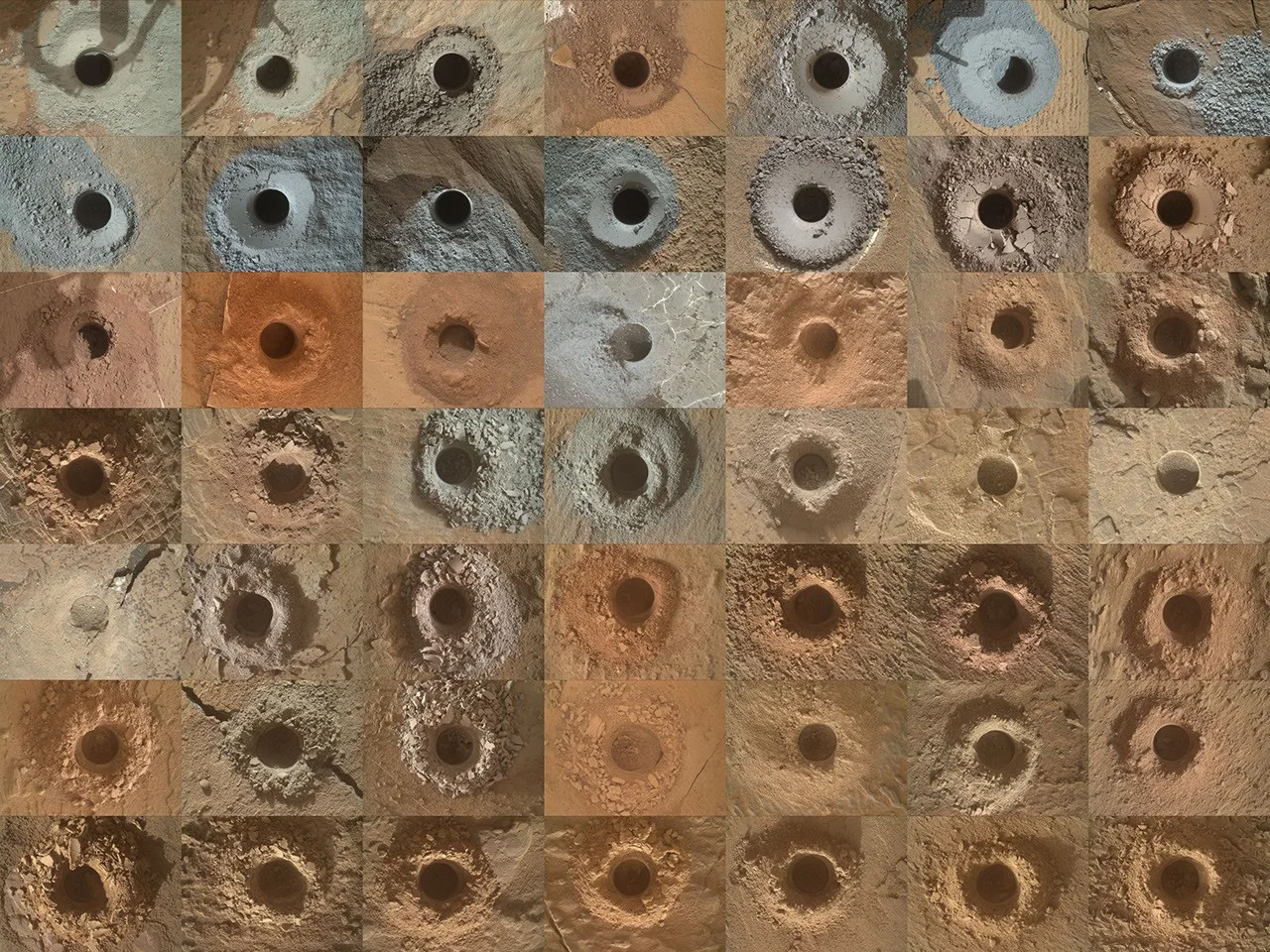
These samples help scientists study the minerals and chemicals inside Martian rocks. They can reveal how water changed the planet long ago.
The November 17 mission update brought another change. After studying the samples, the team planned to resume the climb up Mount Sharp.
The update also described the return of clear polygon patterns. Curiosity photographed these shapes in the ground with its Mastcam camera. They look like small, connected outlines across the surface.
Scientists study such patterns to understand how the ground formed. Their exact origin still needs further investigation.
A mountain made of Mars history
Curiosity has been climbing Mount Sharp since 2014. The mountain rises about five kilometres above Gale Crater’s floor.
Its layers hold clues about different periods in Mars’ past. Some rocks formed when water changed the ground. Others preserve signs of wind and later changes.
This is why the rover moves slowly from one area to another. It does not simply need to reach the top. It needs to examine the rocks along the way.
The mission began on November 26, 2011. Curiosity landed on Mars on August 6, 2012. NASA sent it to answer one important question: Did Mars ever have conditions that could support tiny life forms called microbes?
The rover has found evidence of ancient rivers and lakes. It has also detected organic molecules in Martian rocks. These molecules contain carbon, an important building block of life.
But organic molecules do not prove that life existed. They can also form through non-living processes. Curiosity studies them as clues, not as proof of past life.
The team now plans to continue towards the Yardang unit. Yardangs are long shapes carved into rock by wind. Studying this region may help scientists understand how Mars changed.
For now, Curiosity keeps climbing and looking. A rock sample, a ground pattern or a drifting cloud can each add a new detail. Mars still has many pages left to reveal.
📄 Source & Citation
Primary Source: NASA — Mars Science Laboratory: Curiosity Rover
Additional NASA mission reports: Curiosity Spots Drifting Twilight Clouds · A Collage Showing 49 Drill Holes · The Return of the Polygons — November 17 update
Comments
No comments yet. Be the first to share your thoughts.
Leave a comment